
Erasmus Accreditation- 2024/2025


2024/2025
- PROJECT 2024-1-BG01-KA121-SCH-000219663
Summary of project activities:
- In this second year of accreditation for our organization, we have completed the planned activities 100%. We are extremely satisfied with the successes and results achieved for us, the teachers of the Кindergarten "Yavor".
- We managed to implement three types of mobility: participation in a structured course, work observation and the teaching visa. This ensures a gradual and smooth upgrade of skills and competencies, as well as the professional realization of each teacher. Thanks to the "Erasmus +" program, funded by the European Union, we can boldly climb the successful career ladder, something that gives very rapid changes in the quality and attractiveness of education in our kindergarten, still the only such institution in the Gabrovo region implementing Erasmus + projects. Our team is like an "ambassador" of Europe, presenting the project activities under the Erasmus + program at many pedagogical conferences and forums.
This project has been funded with the support of the European Commission. This publication reflects the views only of the author, and the Commission cannot be held responsible for any use which may be made of the information contained therein.
2024/2025
Project objective:
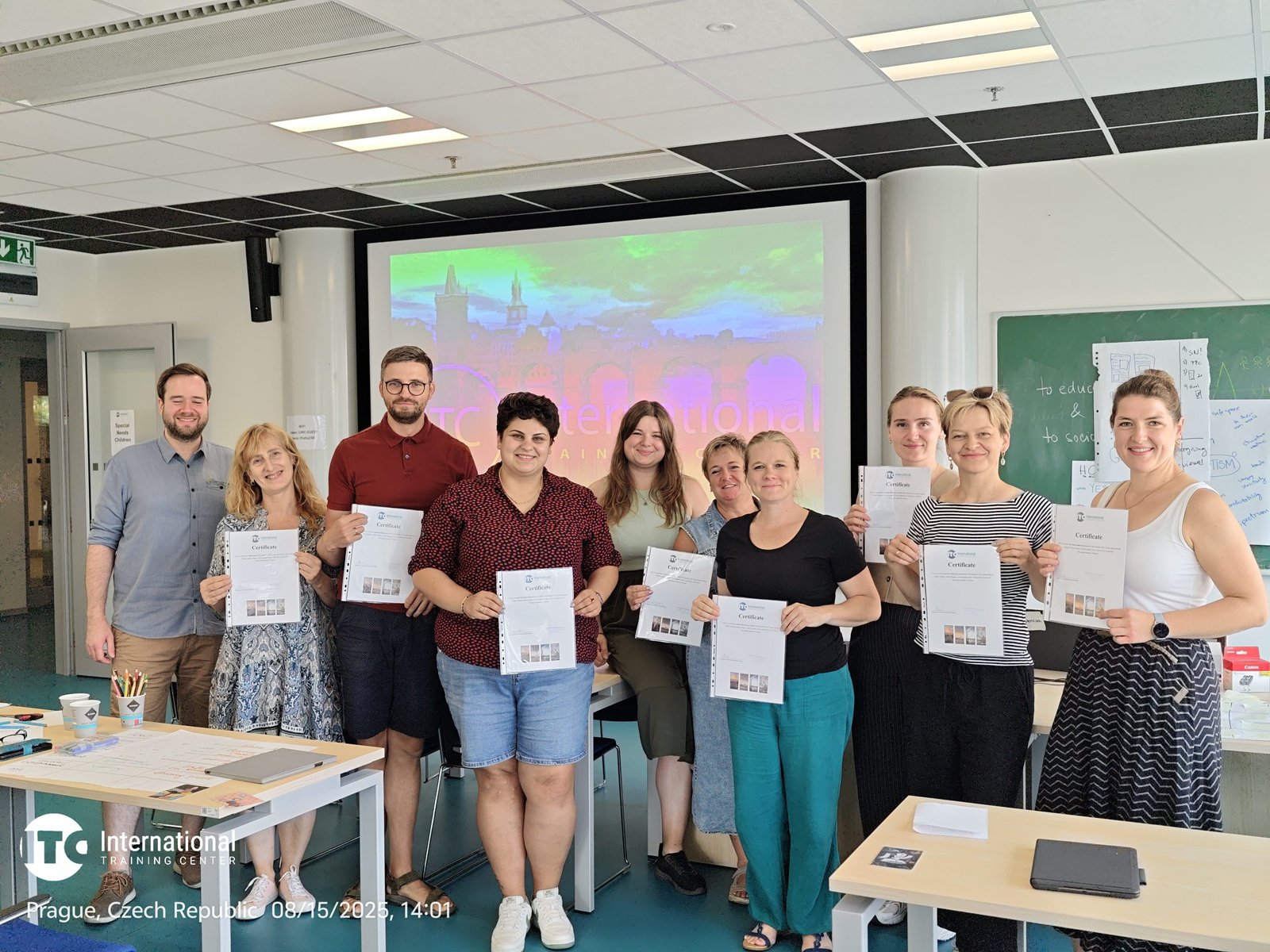
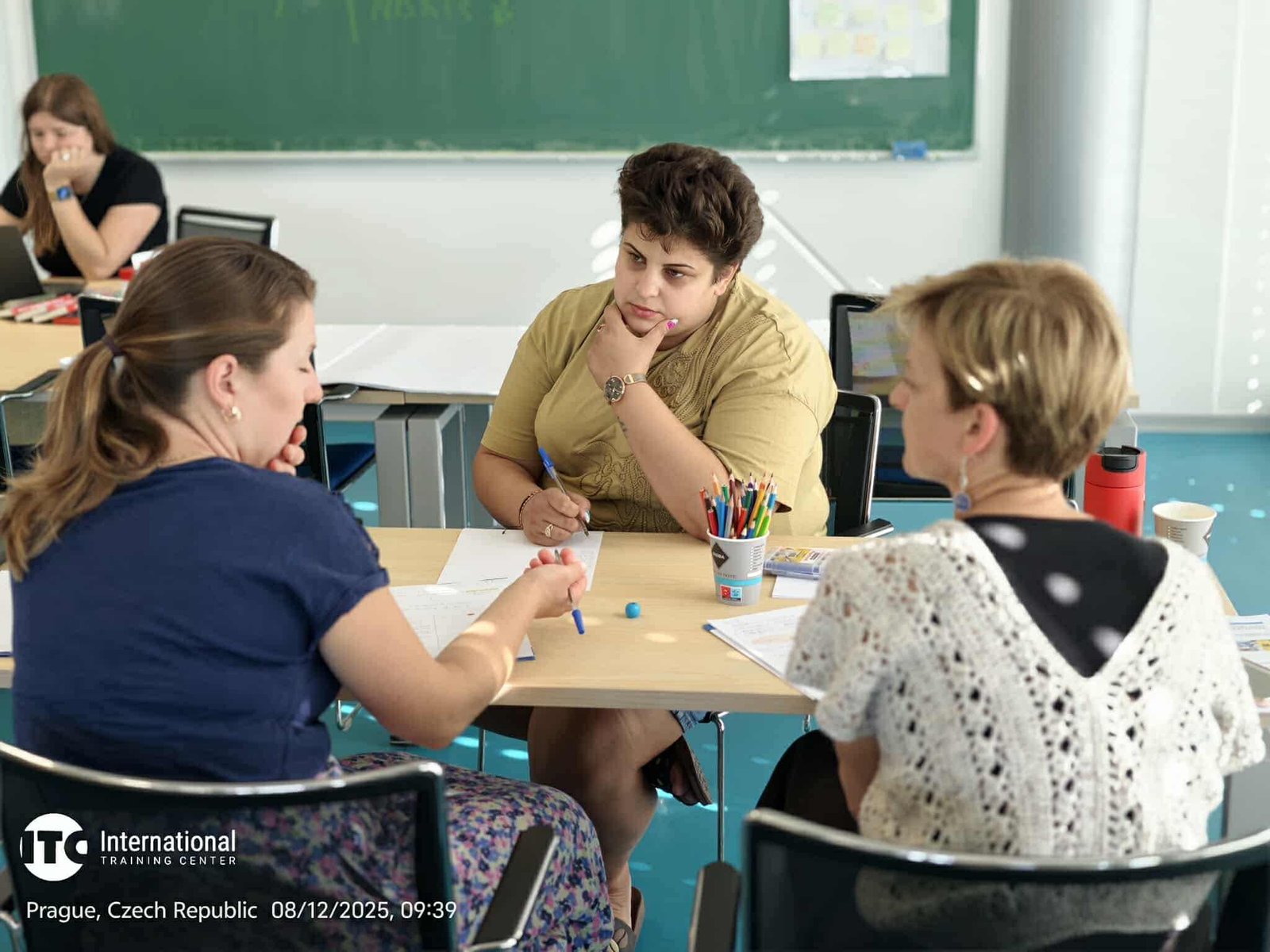
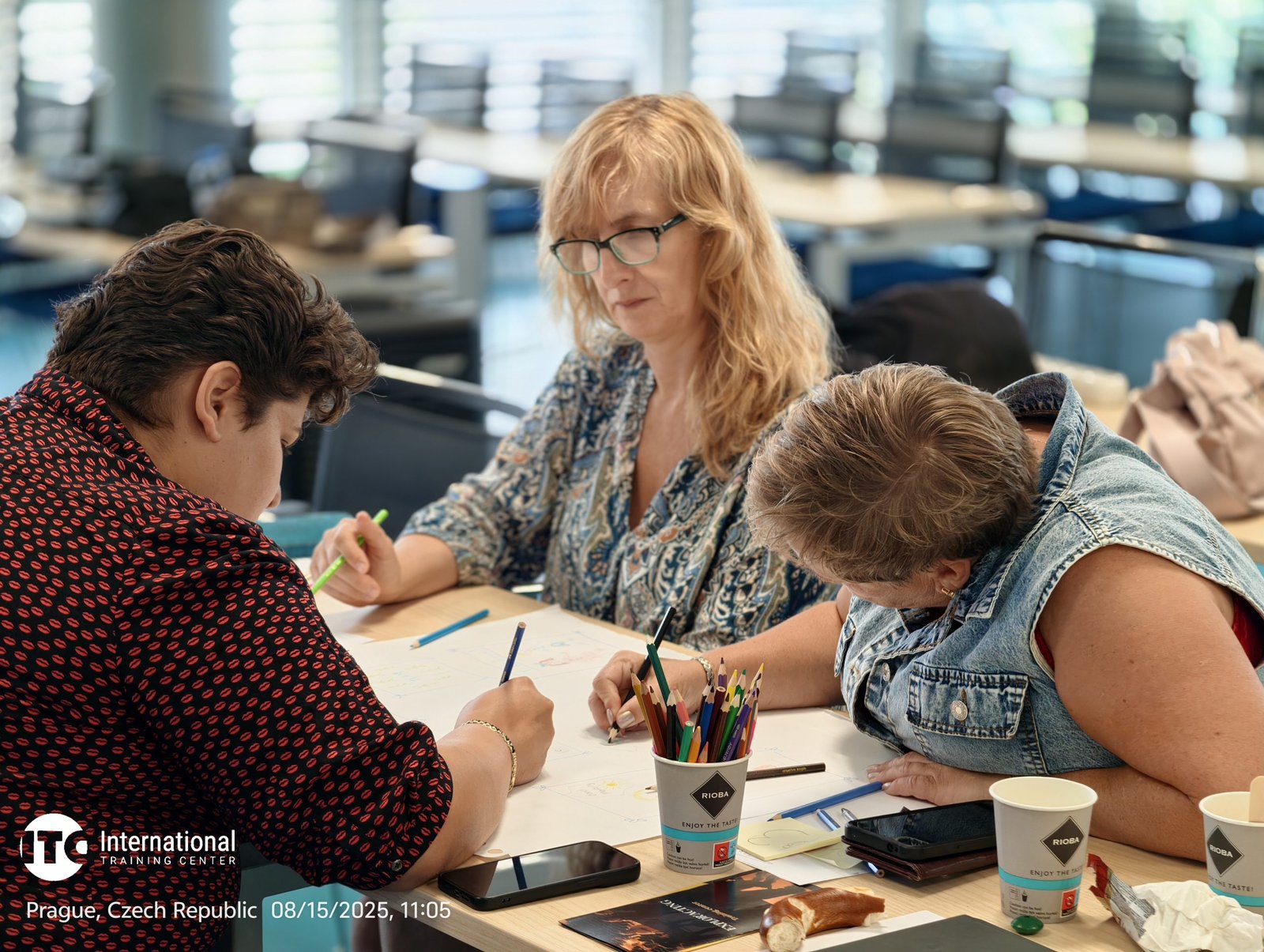
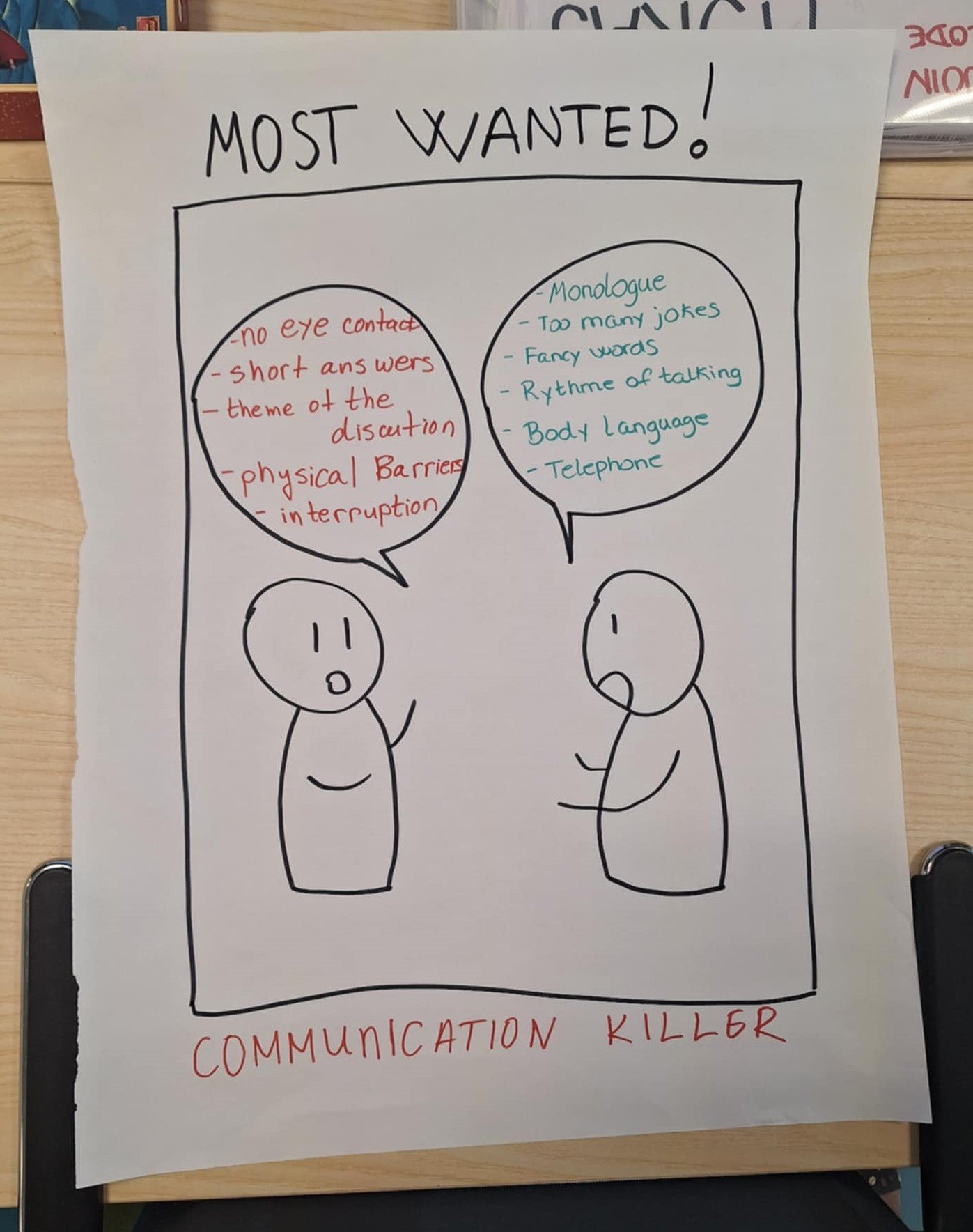
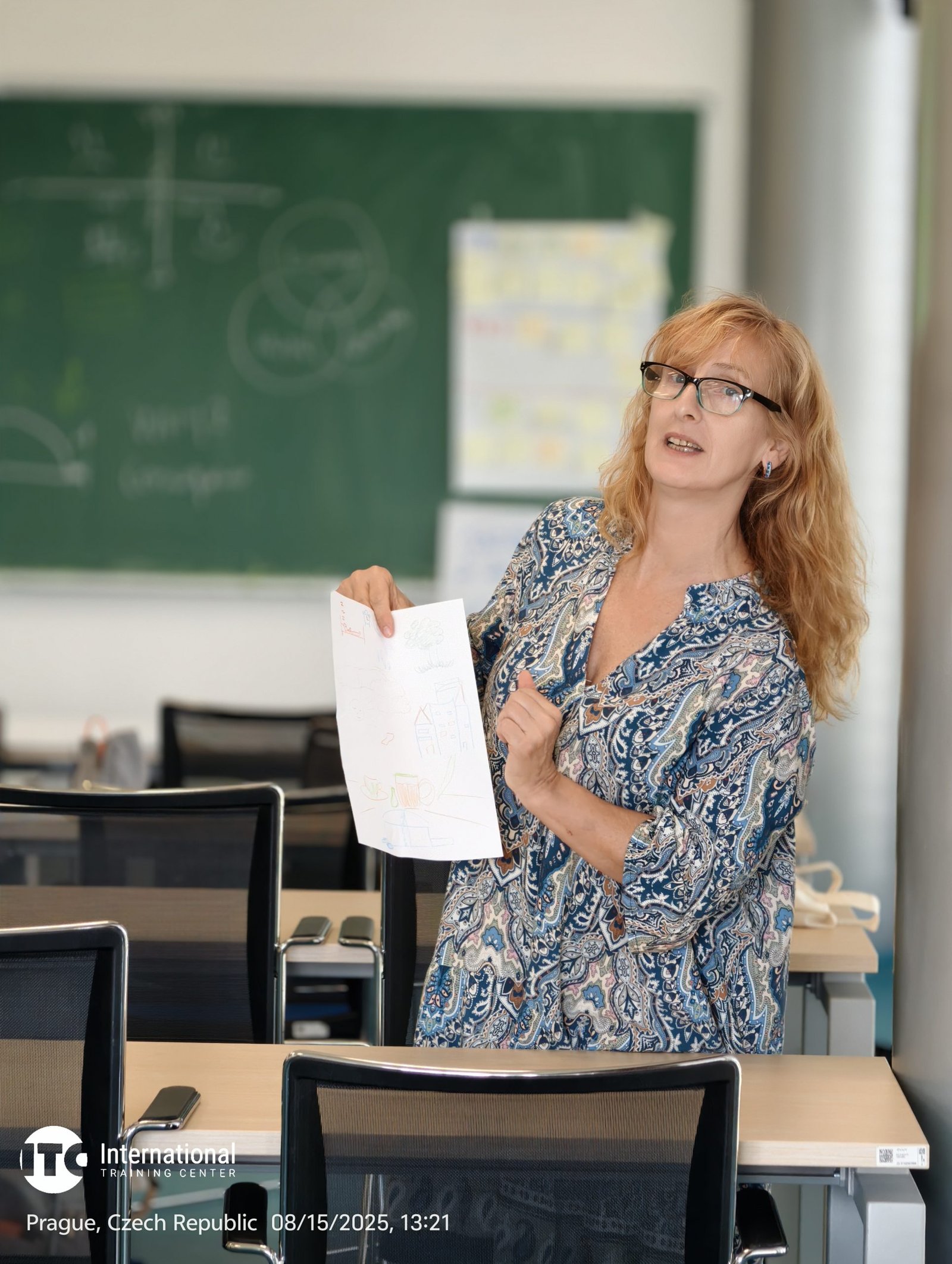
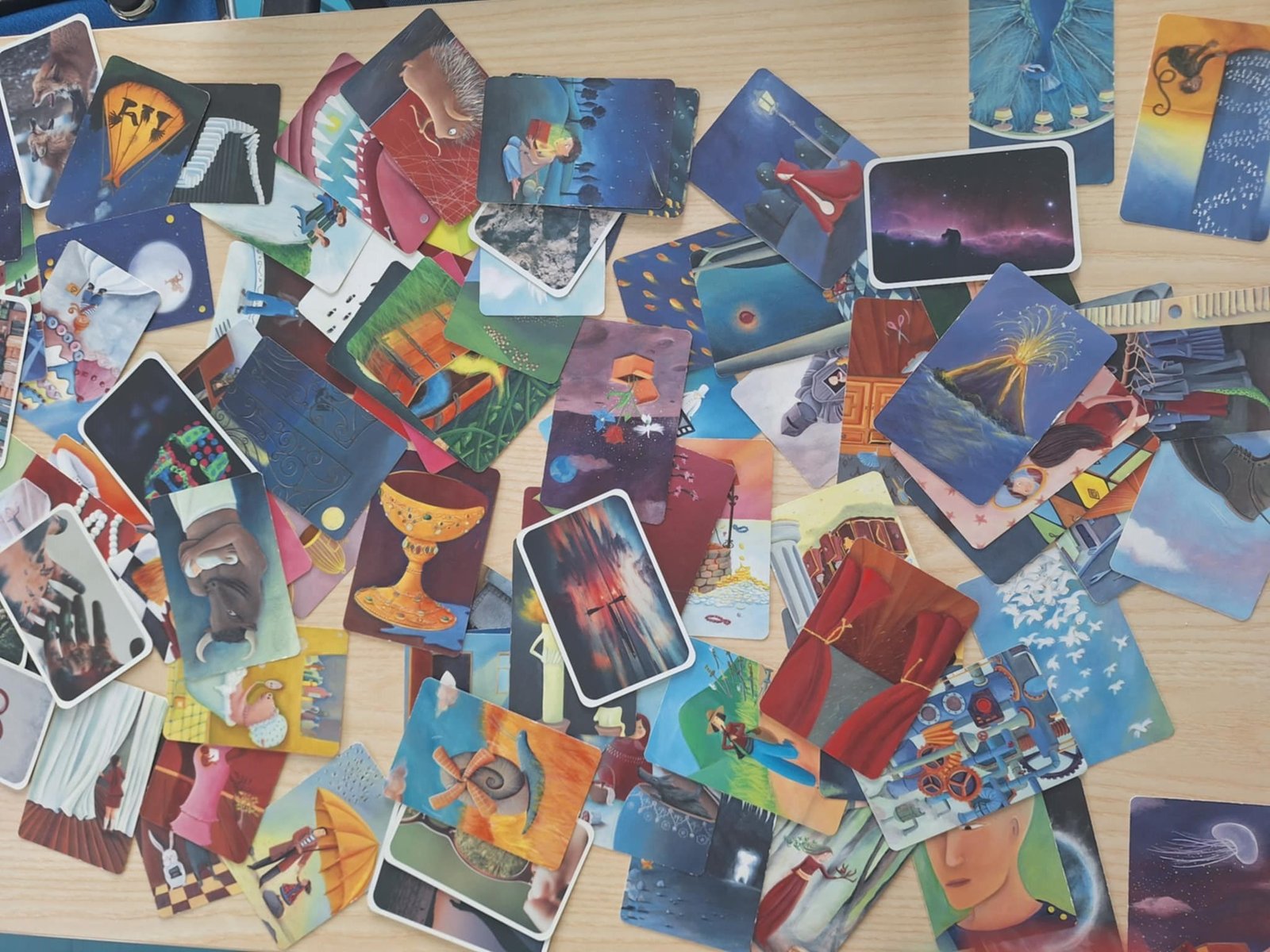
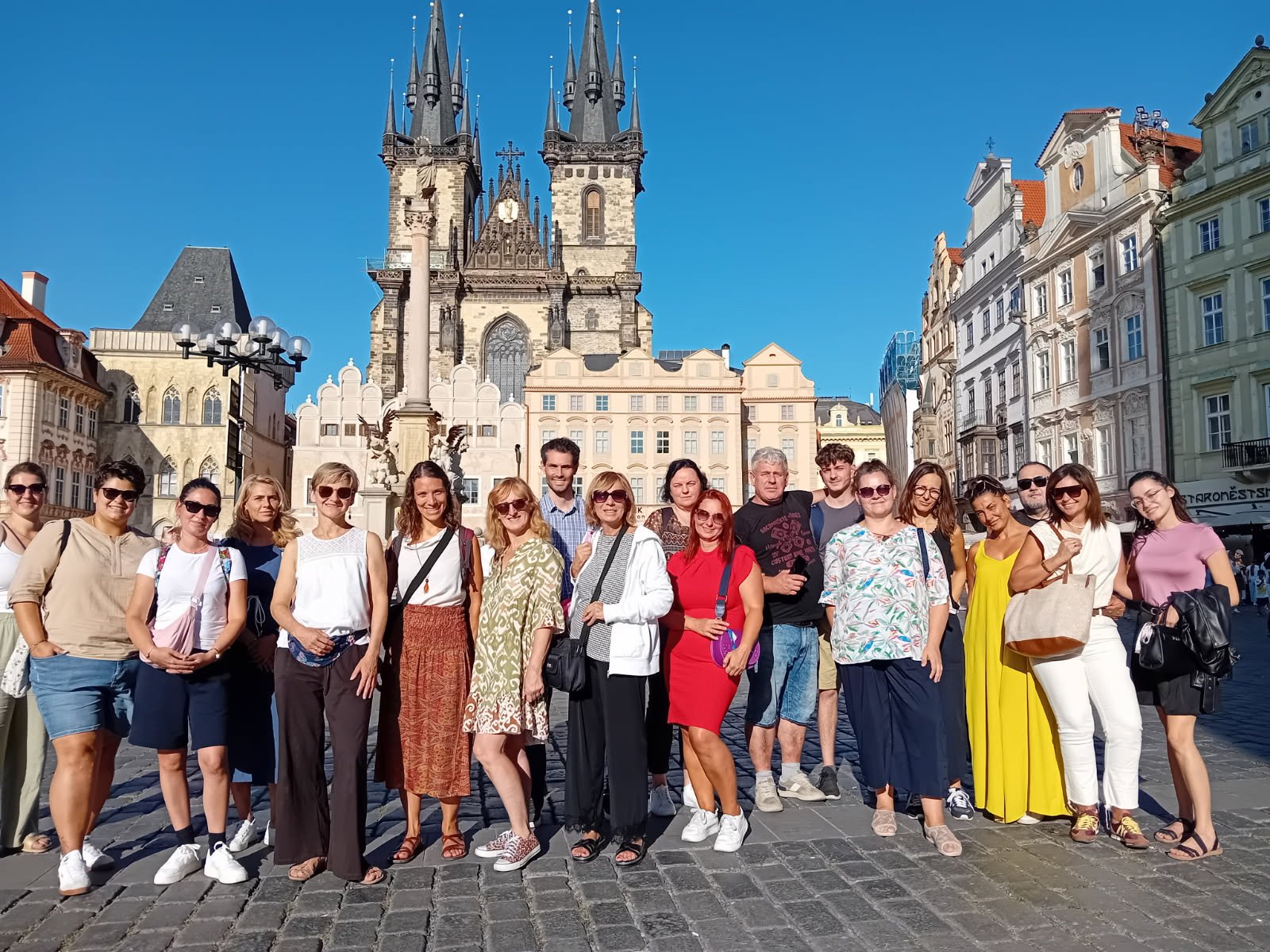
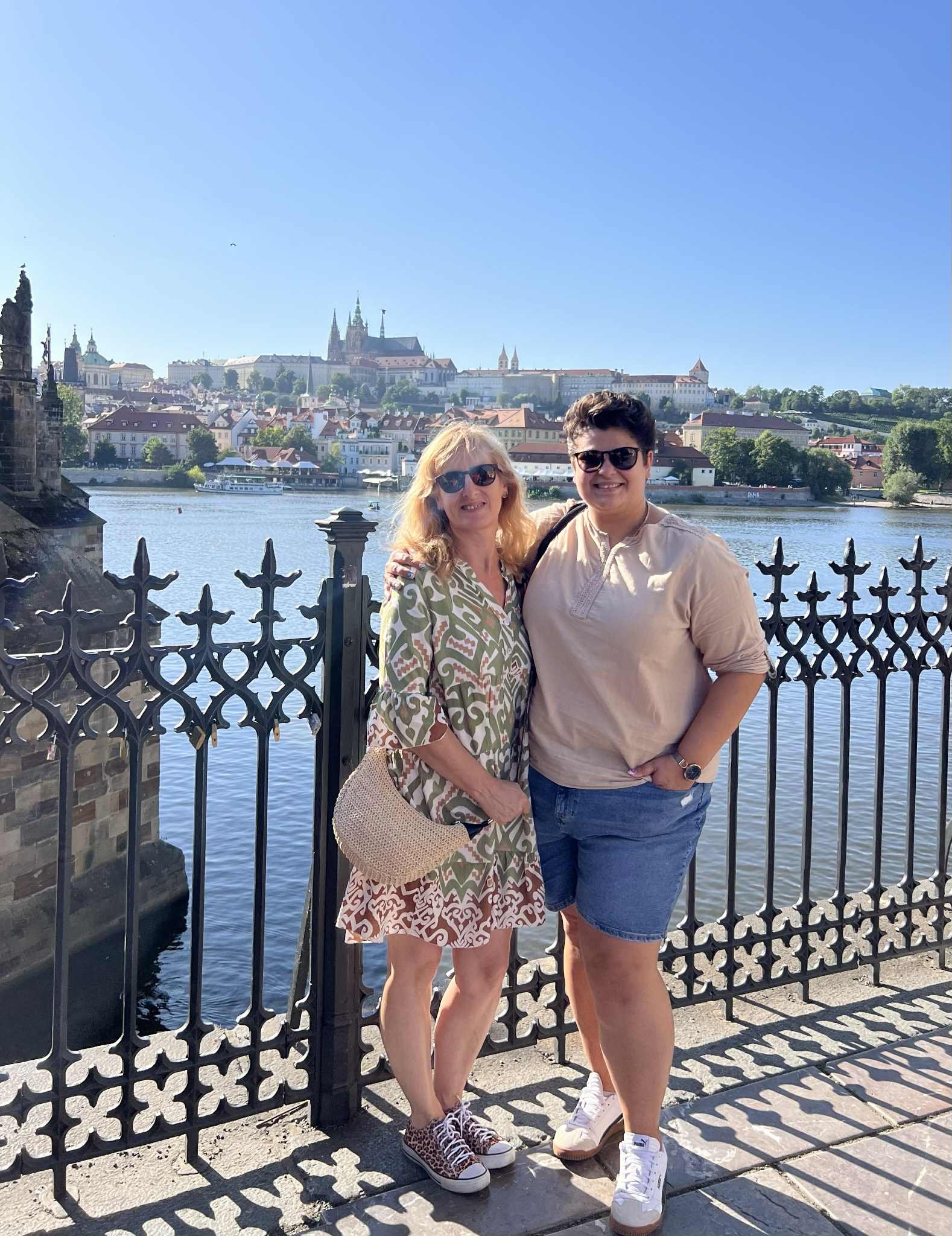
- In August, two participants participated in a training course on “Children with Special Educational Needs” in Prague, Czech Republic. This course focuses mainly on working with children with special needs. You will not only improve your theoretical knowledge and expertise in the field, but also receive practical advice and methods that will help you create a supportive learning environment that is beneficial for all students, not just children with special needs. Topics covered include: inclusion – equality; approaches such as integration and mainstreaming to improve the quality of education and training for all learners.
The training outcomes are:
- Mastering techniques for working with heterogeneous classrooms and communities, dealing with the growing diversity of learners, supporting the inclusion of various minorities in mainstream education.
- Creating ready-to-use materials and methods to improve educational practices in the field of education of children with special needs, promoting universal access to education, taking into account non-discriminatory values.
- Identifying risk factors and different types of barriers, improving primary, selective and indicative prevention, increasing synergies between education, research and innovative intervention activities.
This project has been funded with the support of the European Commission. This publication reflects the views only of the author, and the Commission cannot be held responsible for any use which may be made of the information contained therein.
2024/2025
Project objective:
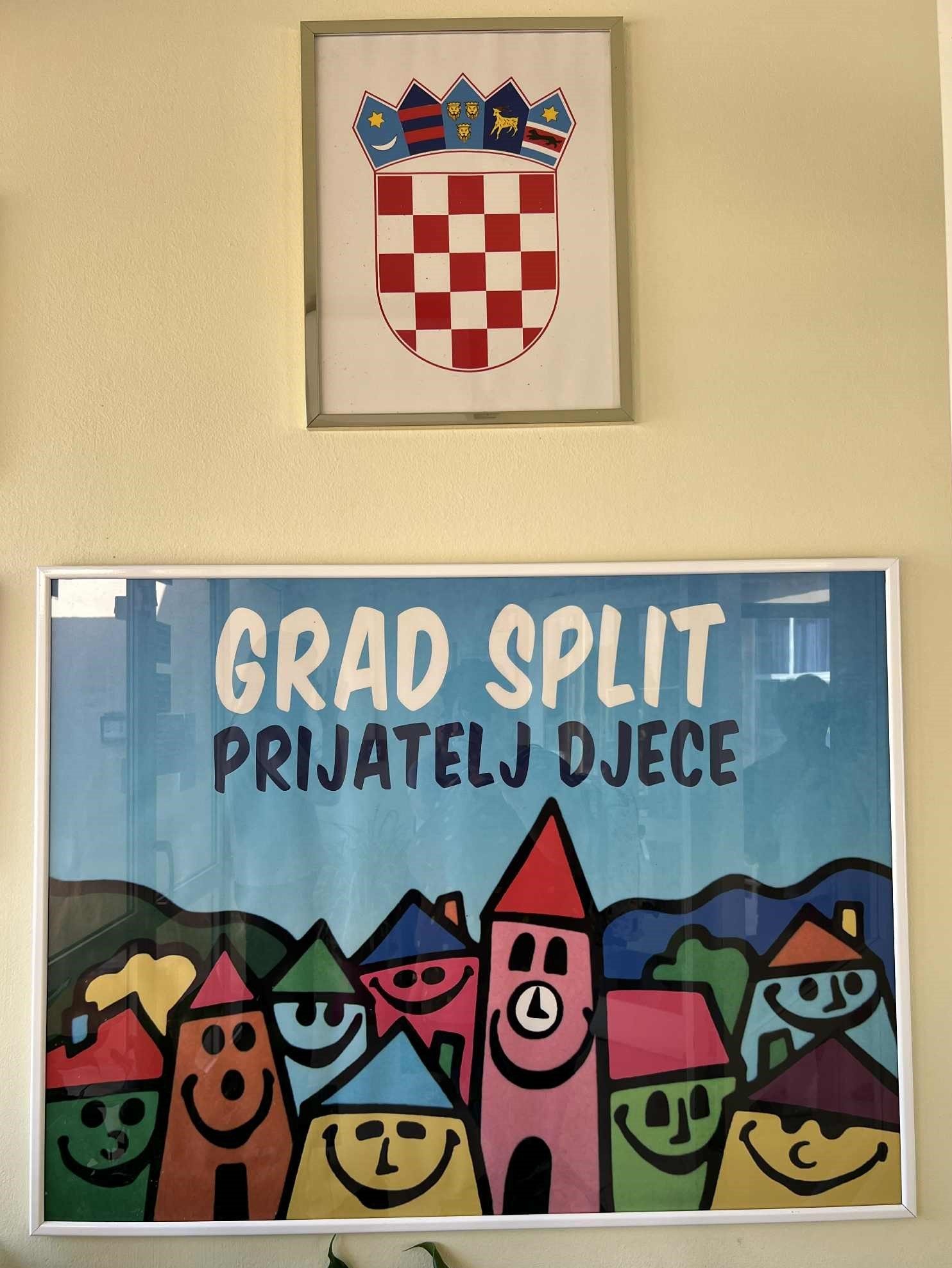
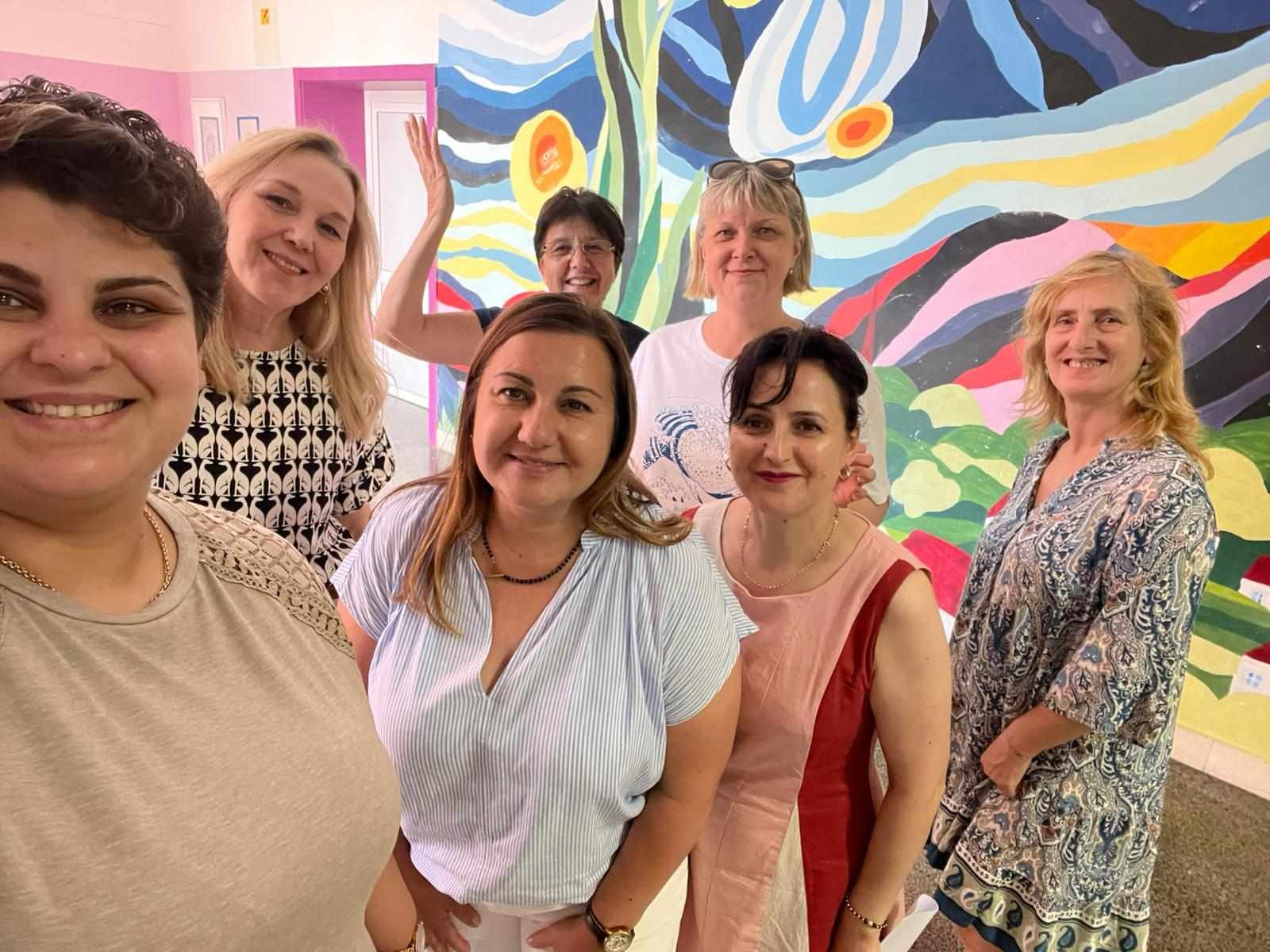
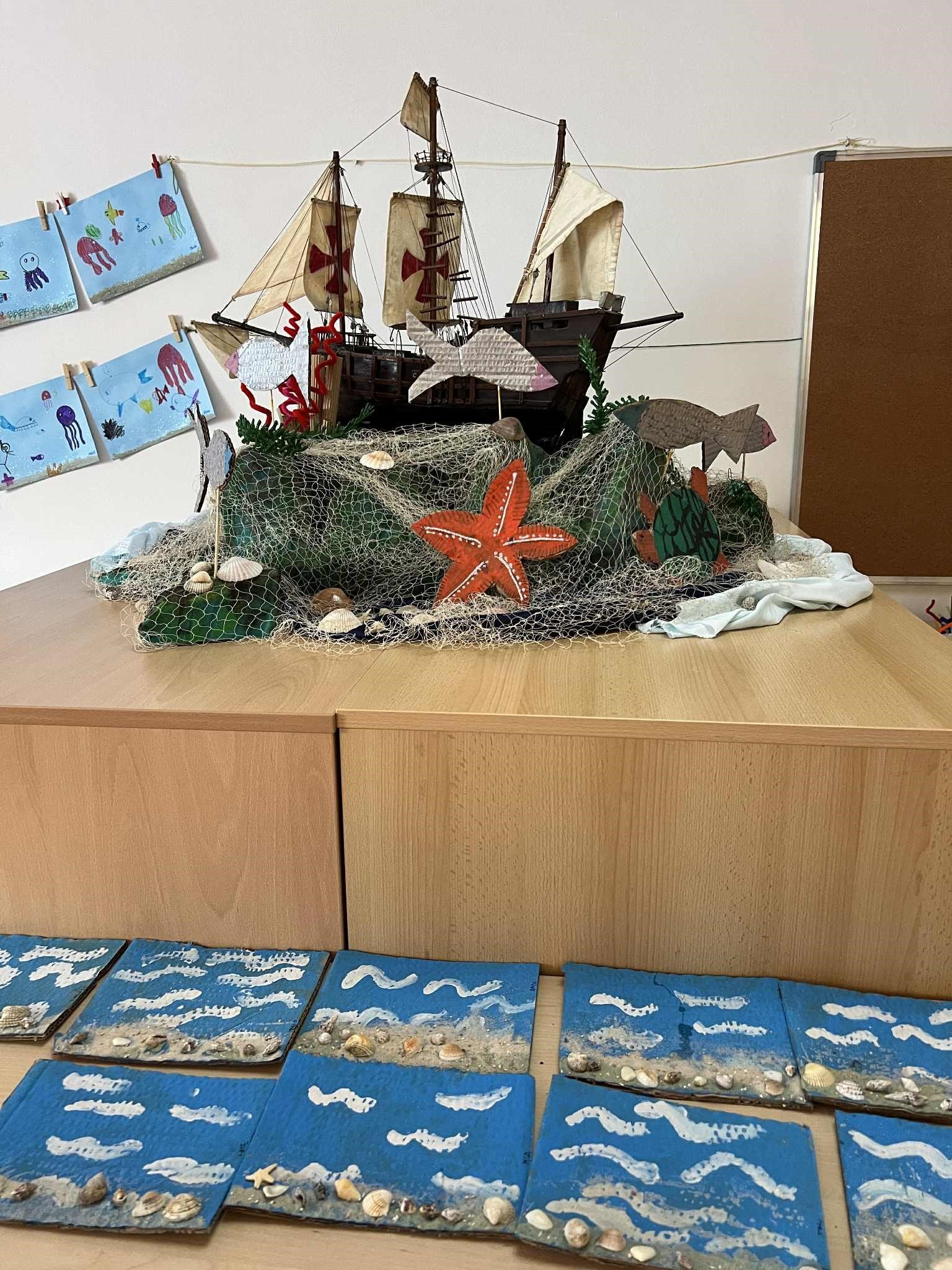
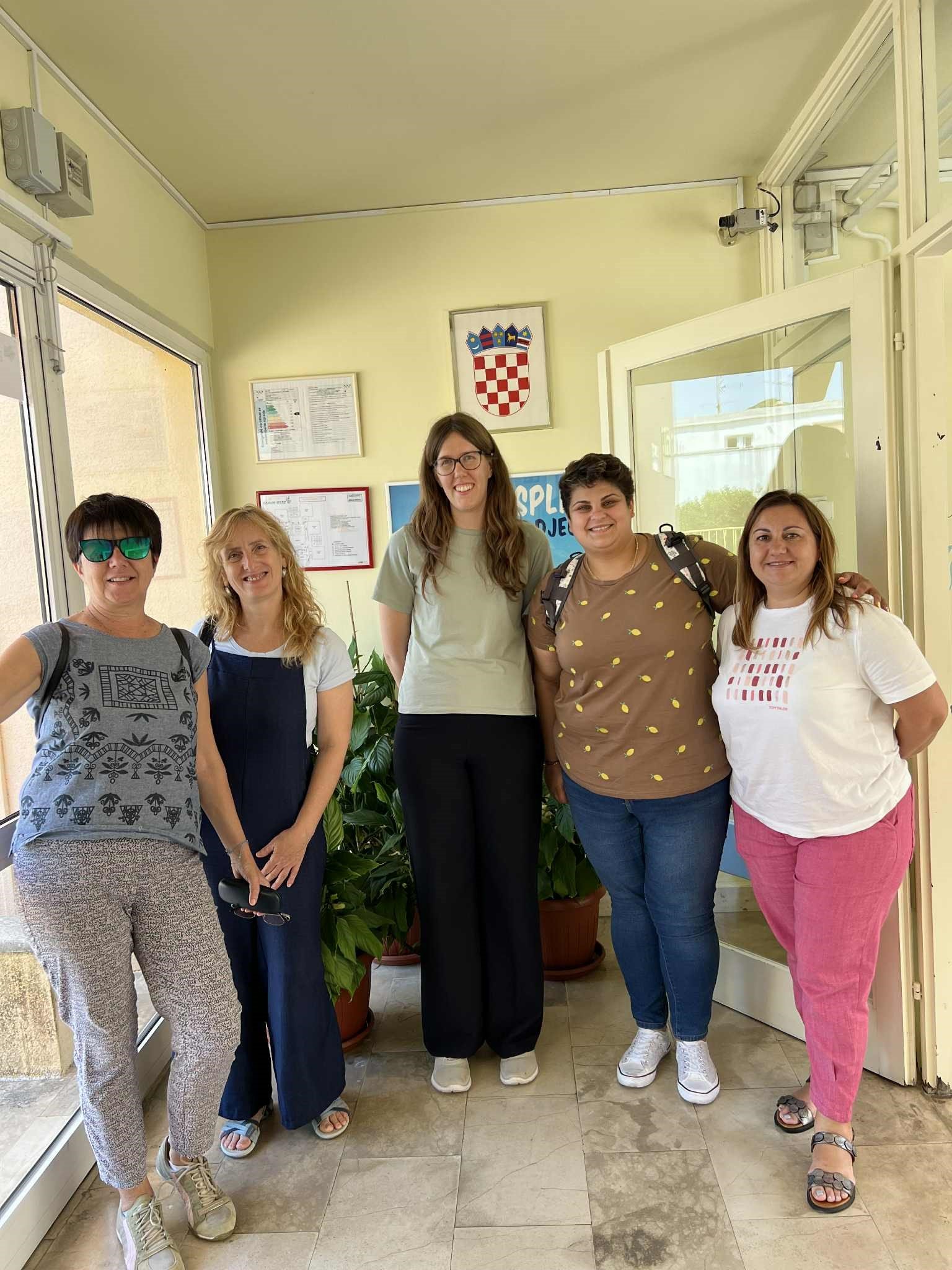
- In June 2025, four colleagues participated in a mobility to observe the educational process in the city of Split, Croatia Main topic of the mobility: Monitoring and introduction of new informal methods and forms of learning and good international practices in Croatian preschool and school education, as a prerequisite for improving the quality of education of children in Bulgaria.
- The program included a professional visit and examination of the educational process in a school and kindergarten in Split, where different program systems are applied. Sharing of experience and exchange of best practices and professional dialogue with colleagues. Observation of different educational systems: Montessori; early language learning; training with an emphasis on the physical development of the child;
- "What makes a good teacher great" - meeting, presentation and discussion with fellow teachers from Croatia.
- Particularly interesting for us was the outdoor learning through experience: an overview and walk through the historical past of Split and the Dalmatian cultural heritage. After each visit, the teachers participating in the mobility conducted internal pedagogical qualification on the observed practices with their colleagues in the kindergarten. We also presented some of these practices at various trainings and events with the children and their parents.
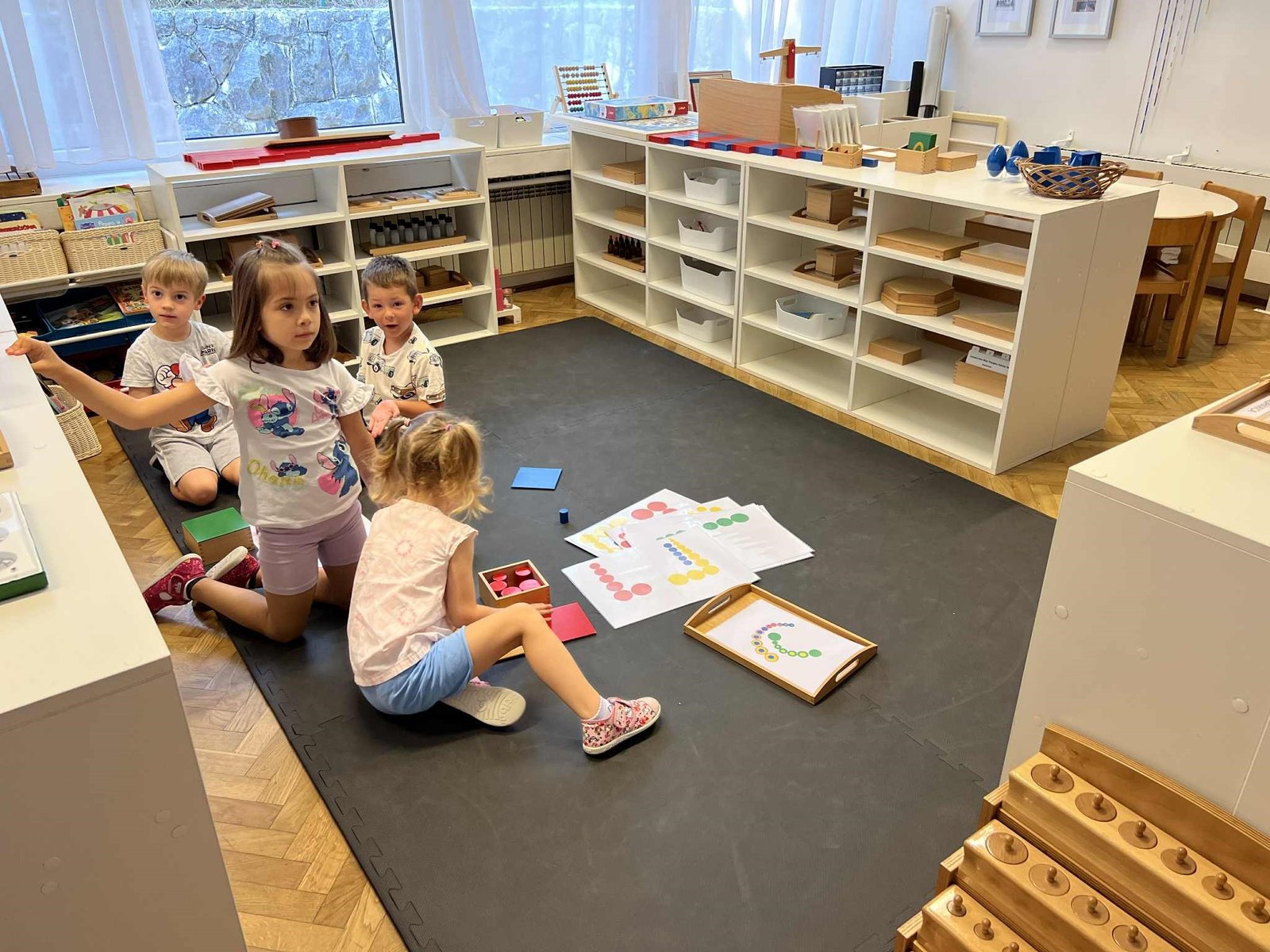
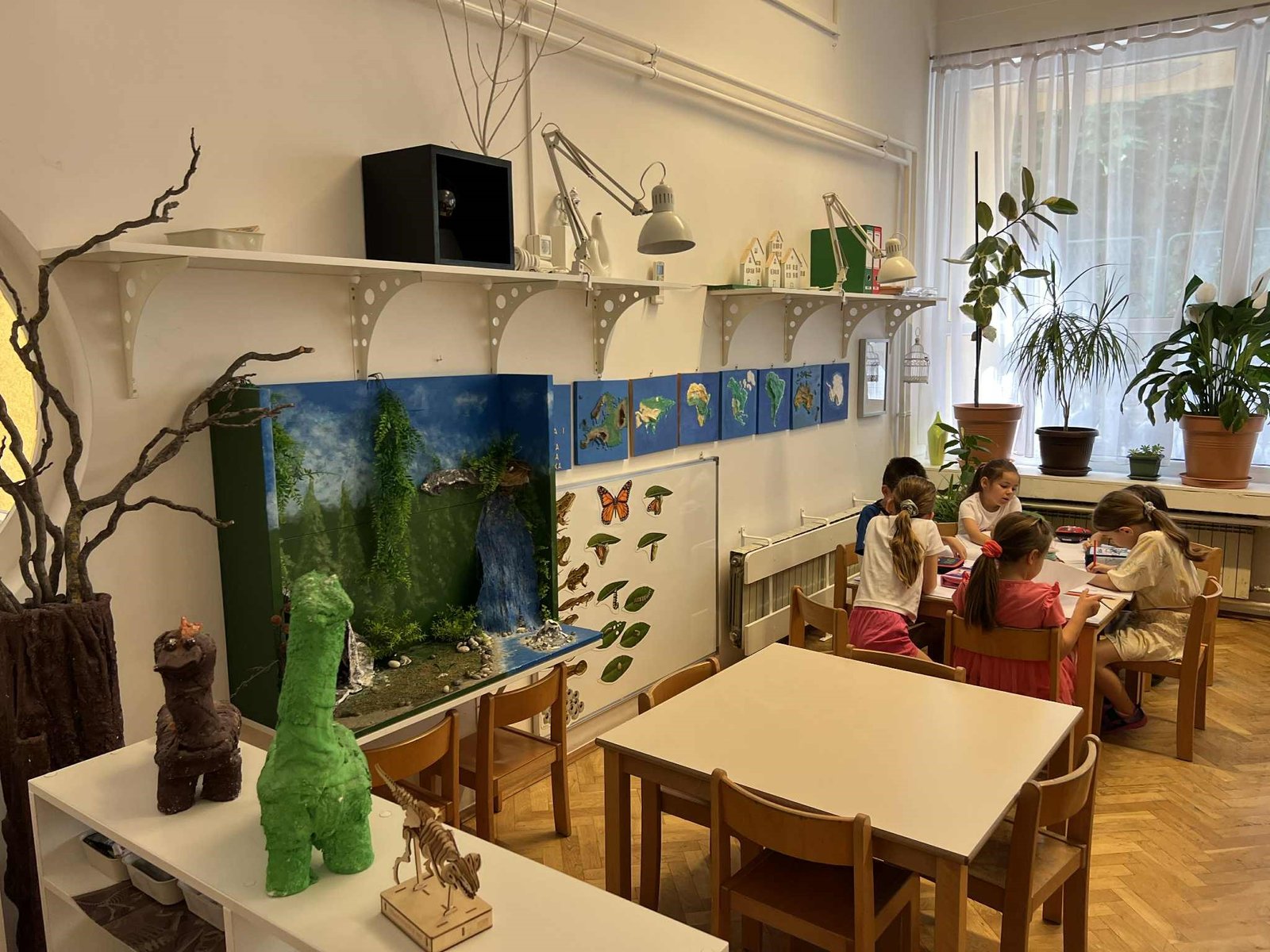
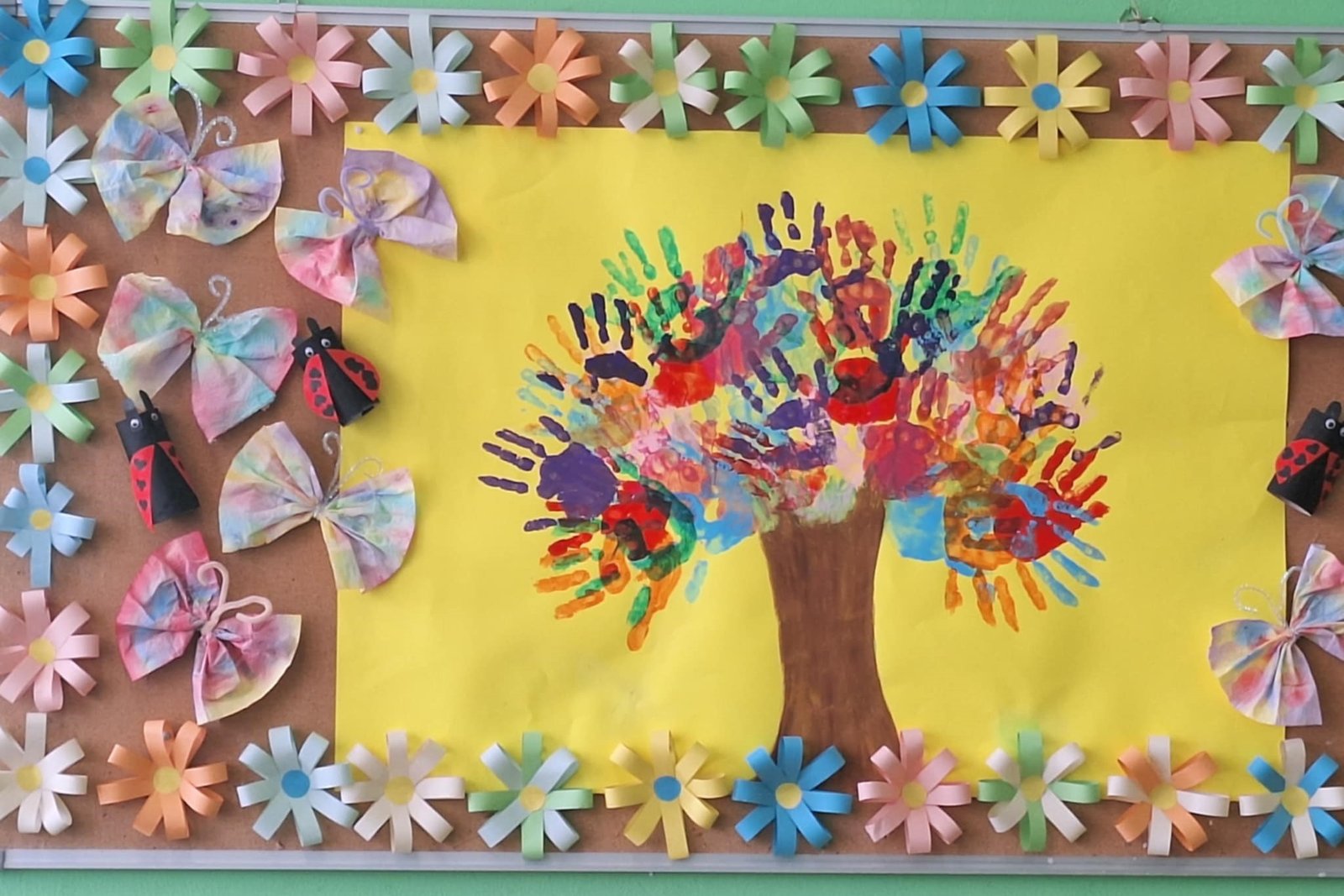
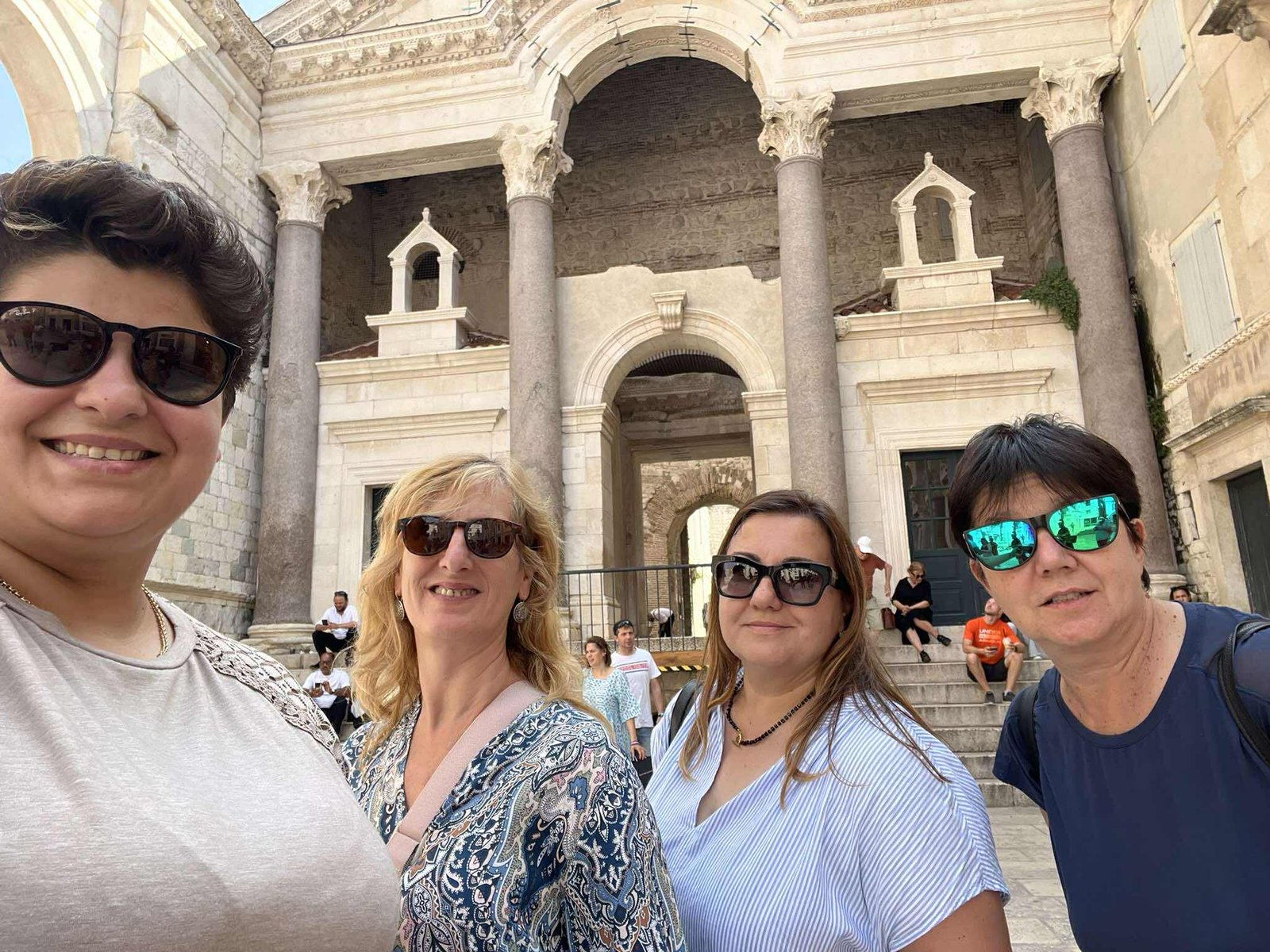
This project has been funded with the support of the European Commission. This publication reflects the views only of the author, and the Commission cannot be held responsible for any use which may be made of the information contained therein.
2024/2025
Project objective:
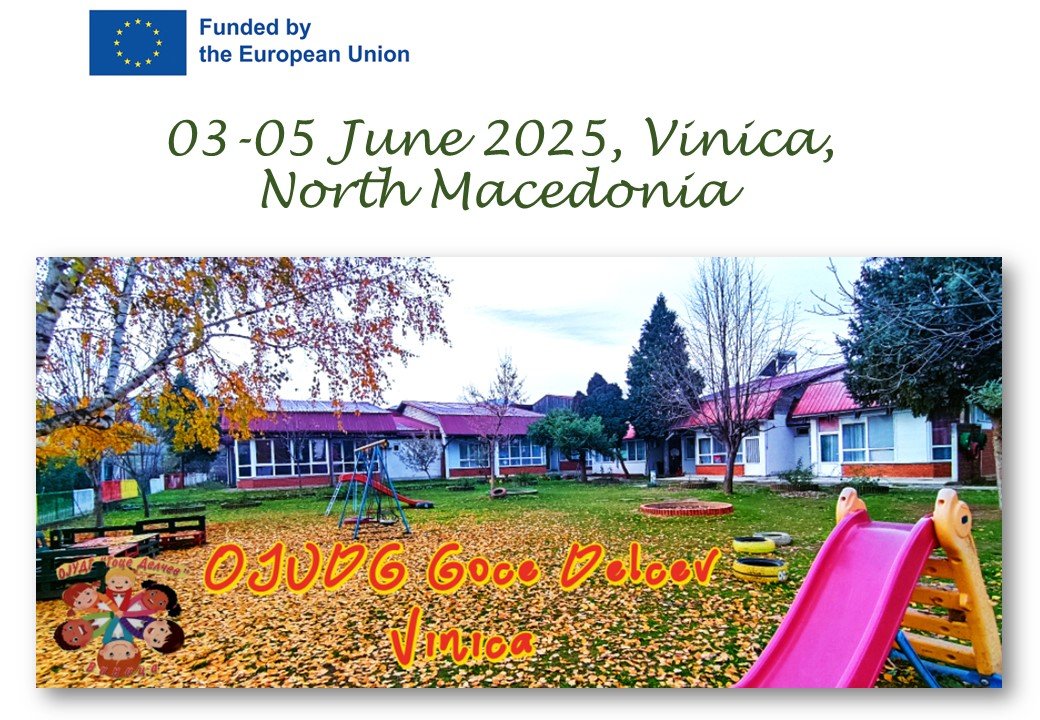
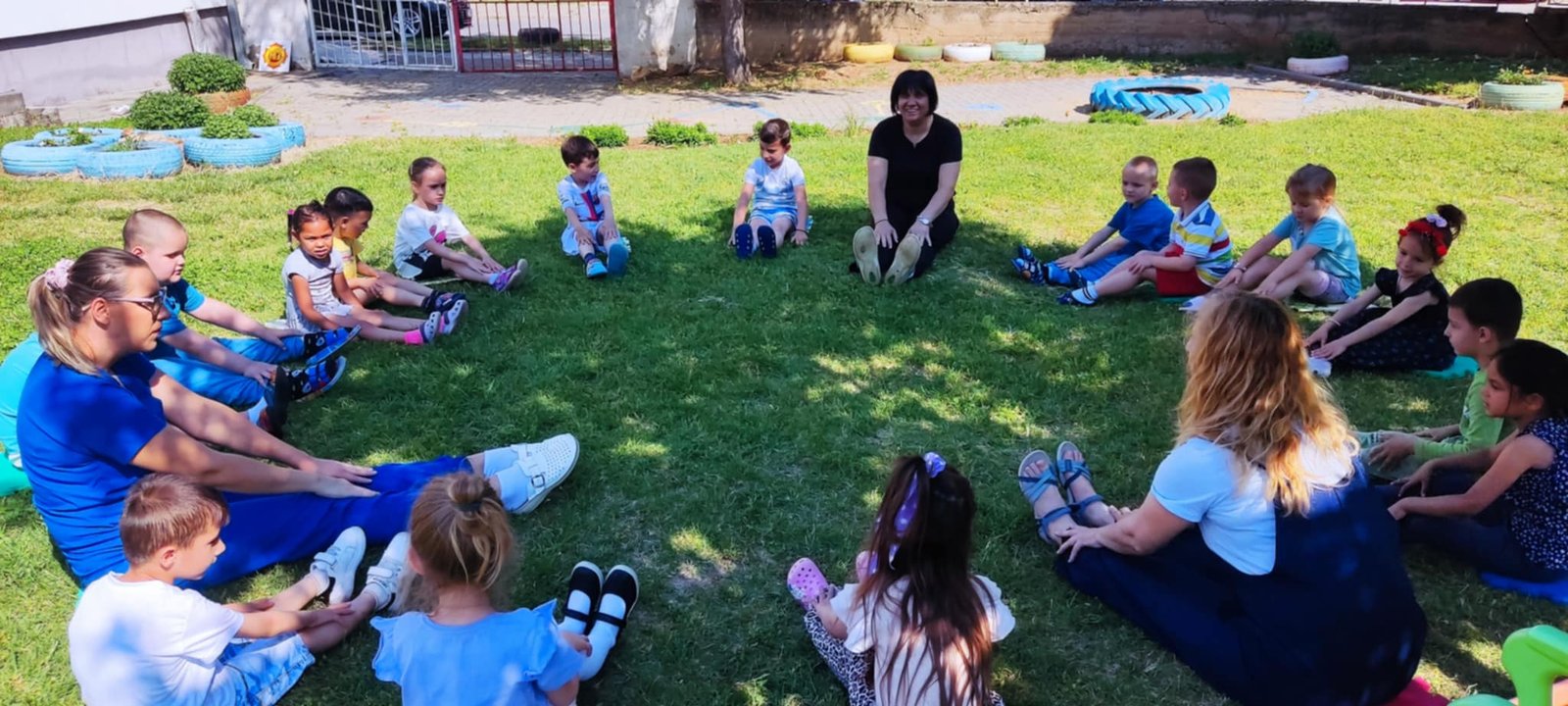
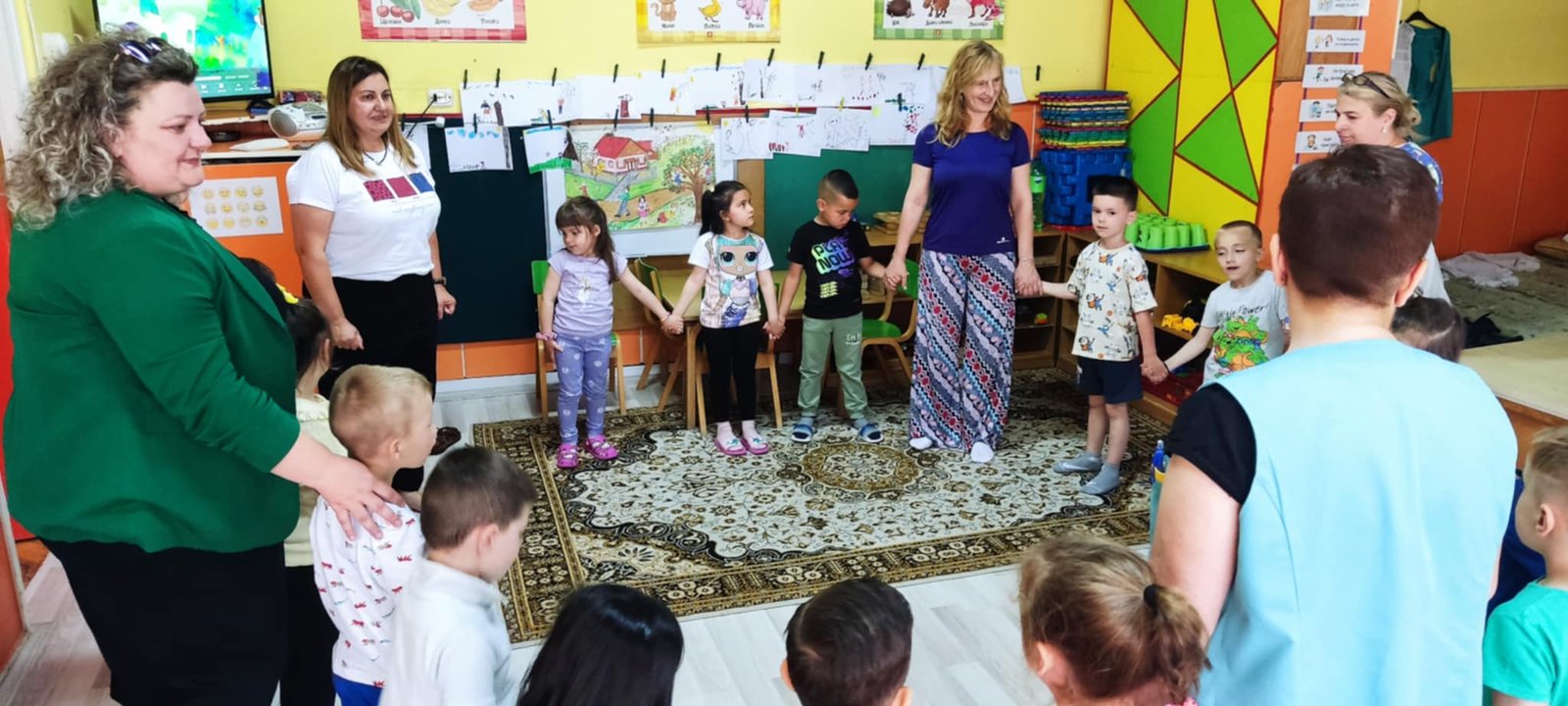
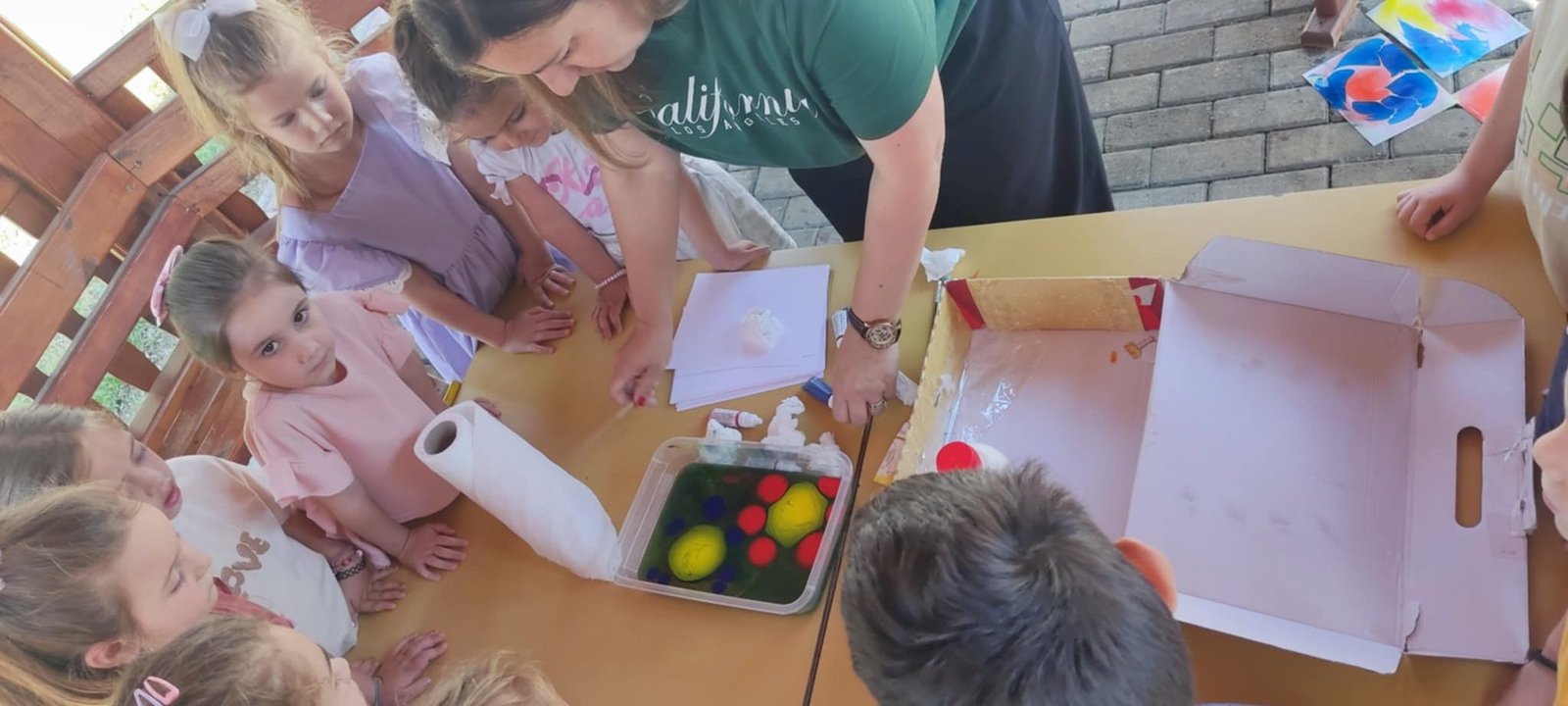
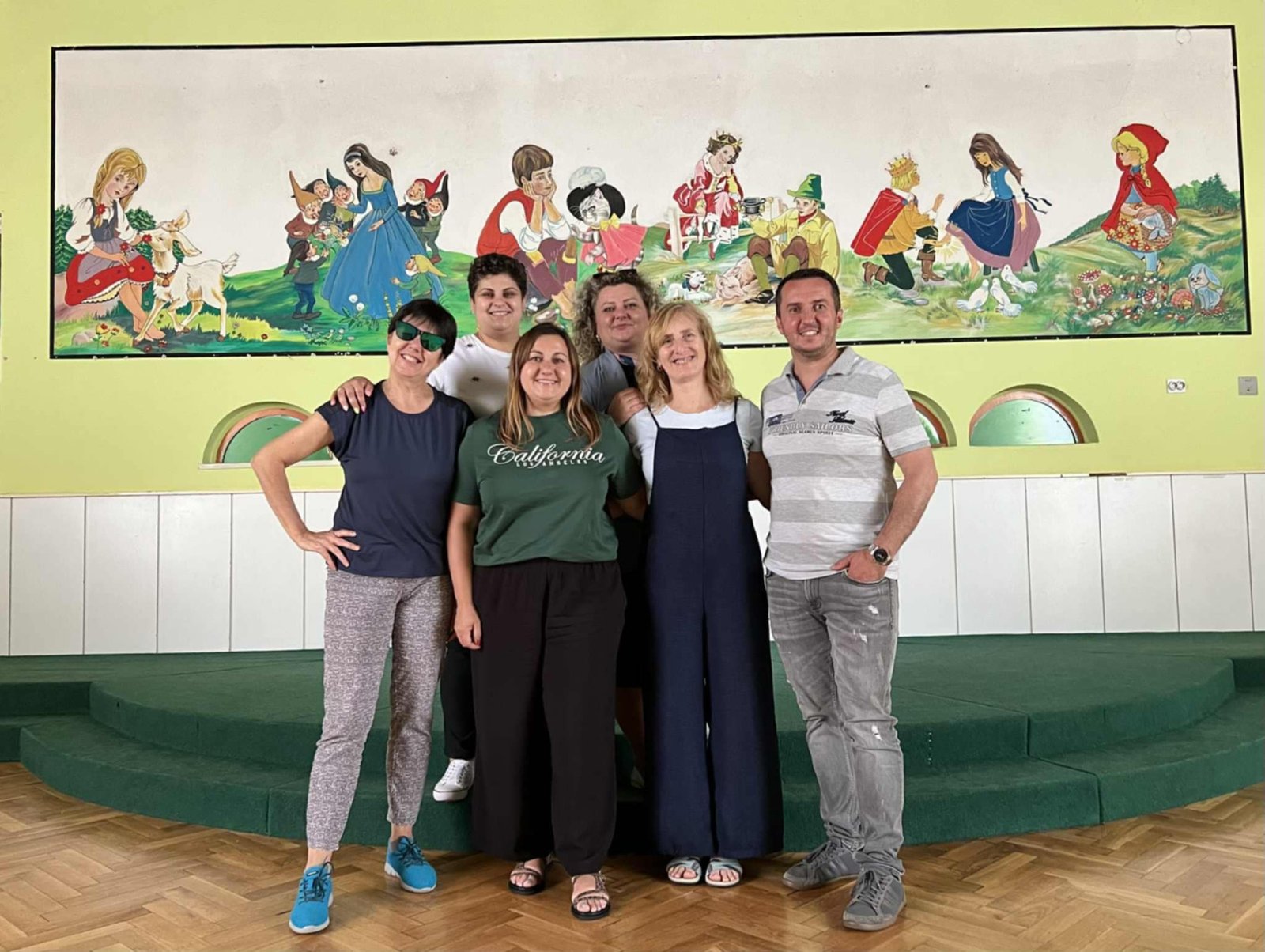
- A team of four teachers visited the Gotse Delchev Kindergarten in Vinnitsa, North Macedonia. In order to share good practices in preschool education through new informal methods and forms of learning, a prerequisite for improving the quality of education for children. They presented to their Macedonian colleagues various activities with children by entering and working with each age group. They were received with great interest and attention, both by the teachers and the young graduates, who were happy to join the various activities. A successful start was made to a new cooperation and friendship.
Mobility period program:
- Activity 1: Kinesiology for children Purpose of the activity Kinesiology in preschool age /science of movement, motor exercises for children/ aims to support the educational process, develop motivation for learning, improve memory and attention, build social habits, as well as qualities for their formation (respect for others and oneself, ability to self-expression, etc.). The training team includes teachers who have completed the certification course "Educational and Educational Kinesiology for Children".
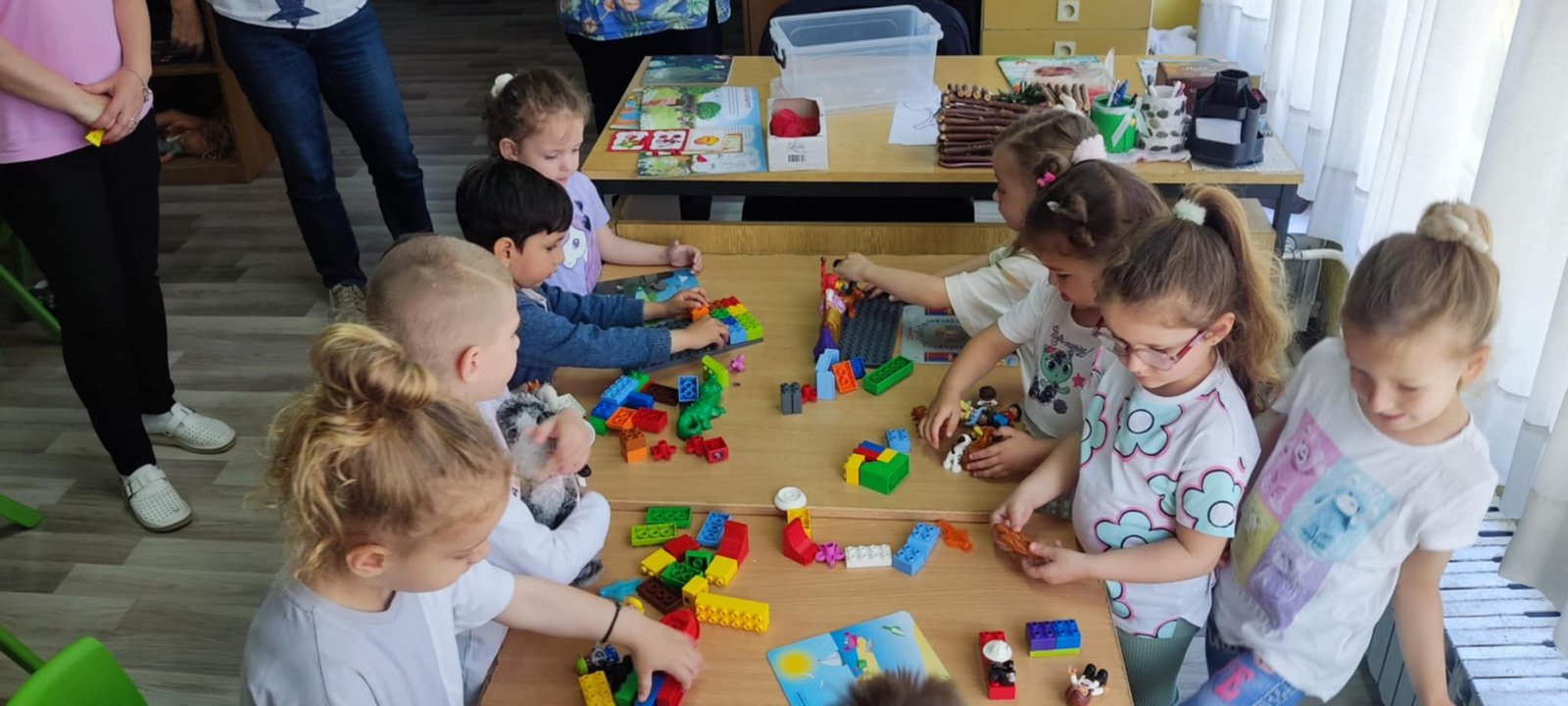
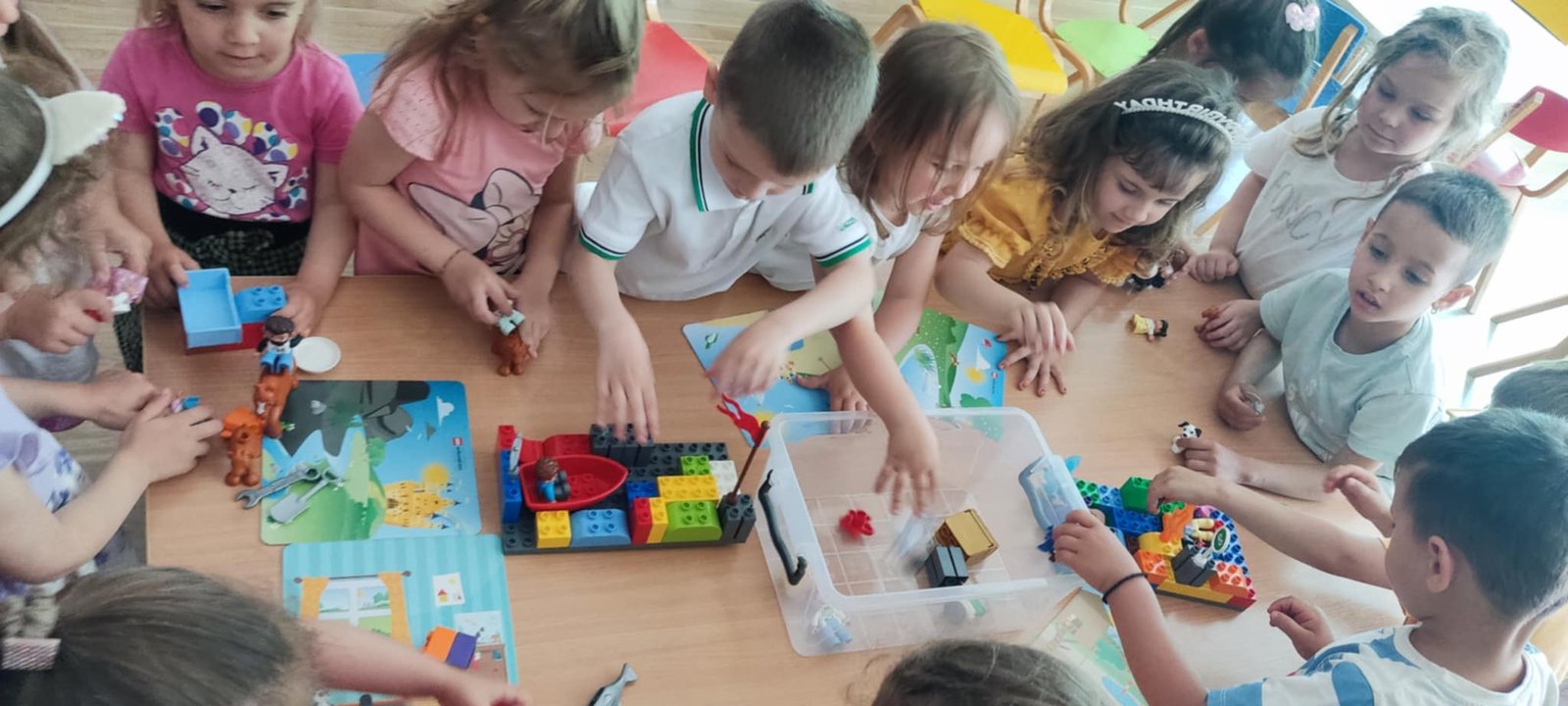
- Activity 2: STEM in Kindergarten through Lego ® Education The purpose of the activity To enrich the theoretical and practical experience of pedagogical specialists to increase personal competencies and professional qualifications for the inclusion of STEM education in kindergarten through the capabilities of the Lego ® Duplo system constructors. Learning through construction as a comprehensive approach in early childhood education.
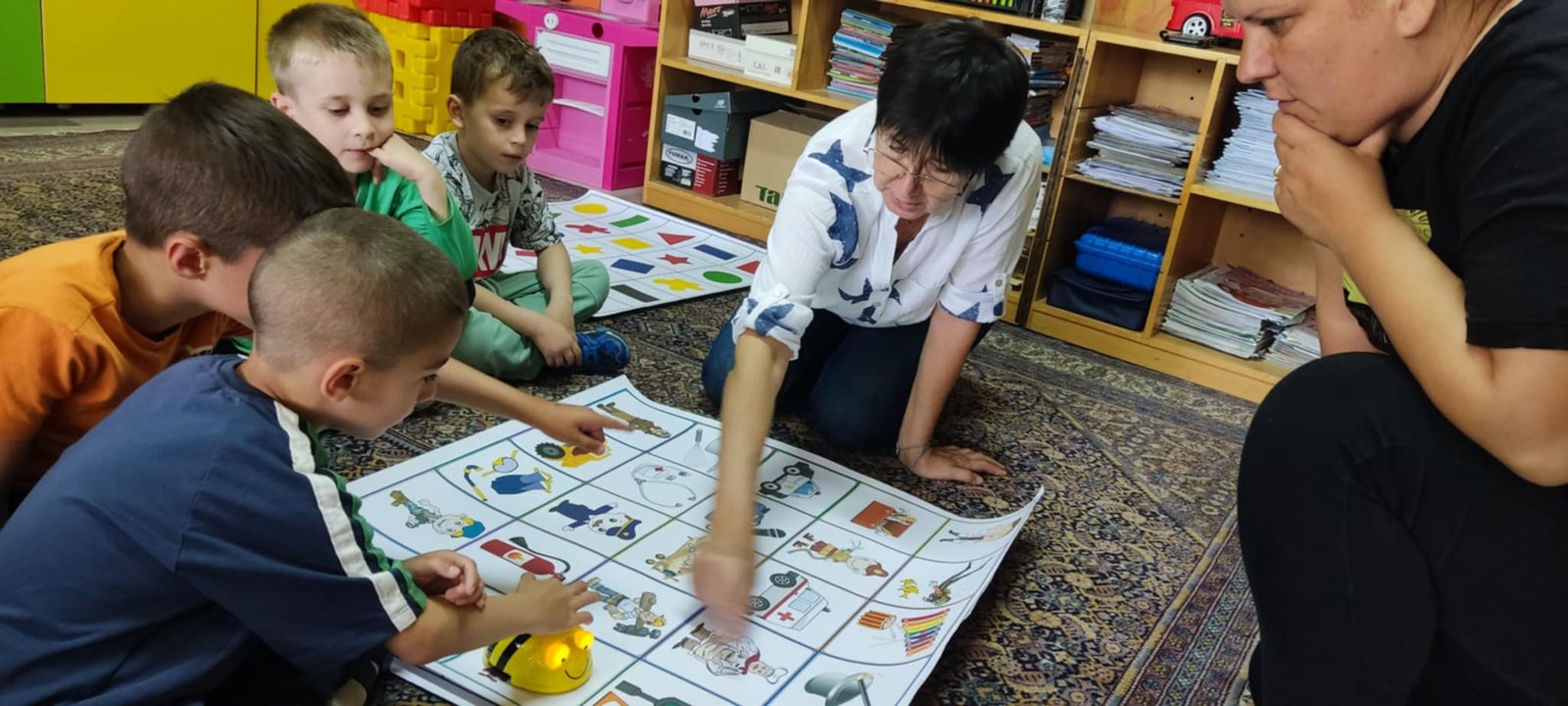
- Activity 3: Robotics and coding with Bee-Bot bee and interactive toys The purpose of the activity: Bee-Bot is an educational robot designed to help children learn the basics of programming and logical thinking. It moves in steps and can rotate 90°, which makes it ideal for completing various challenges and tasks. The most commonly used in preschool and primary school age are floor robots -Floor robots.
- Activity 4: STEAM in kindergarten - informal activities for the inclusion of art. Purpose of the activity: Introduction and introduction of the Ebru technique /painting on water/ and rhythm cards "Rainbow" to stimulate creative thinking, emotional expression and development of the child's creative abilities through the language of fine arts and music /rhythm/.
This project has been funded with the support of the European Commission. This publication reflects the views only of the author, and the Commission cannot be held responsible for any use which may be made of the information contained therein.
2024/2025
Project objective:
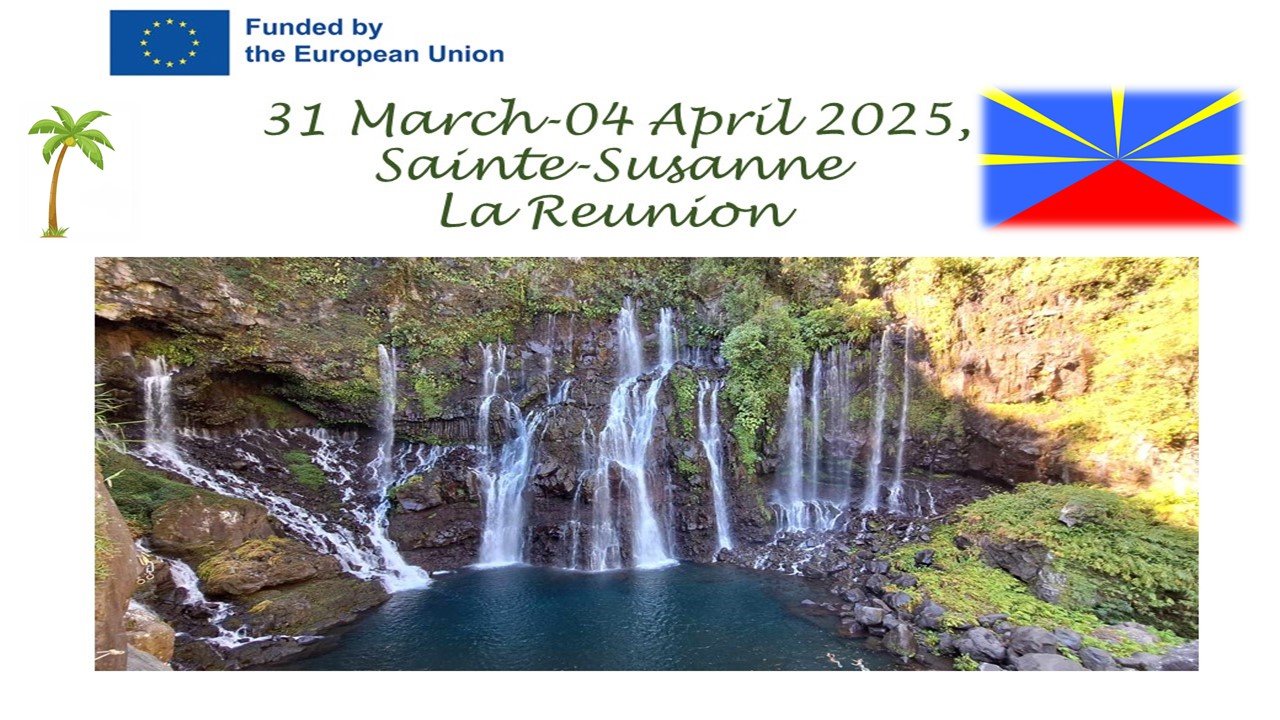
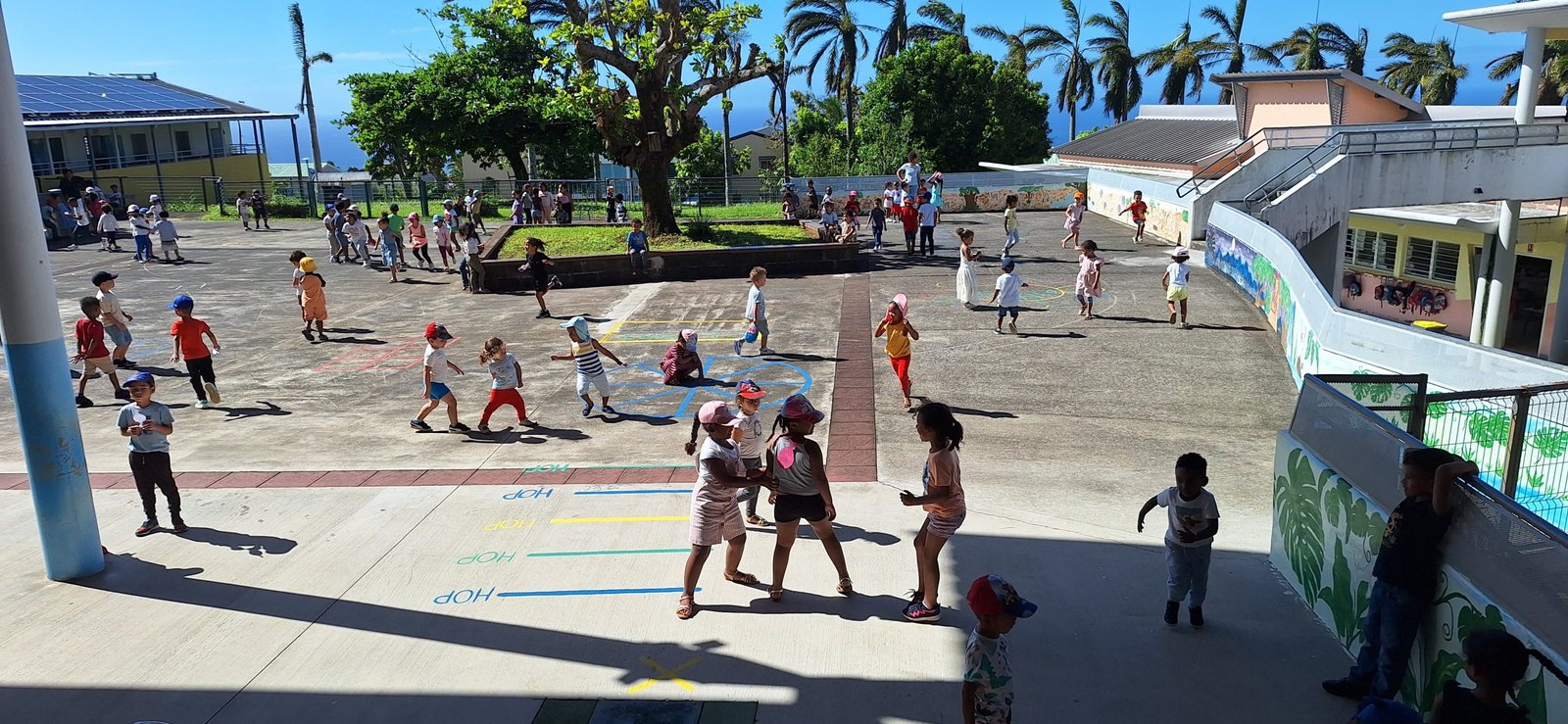
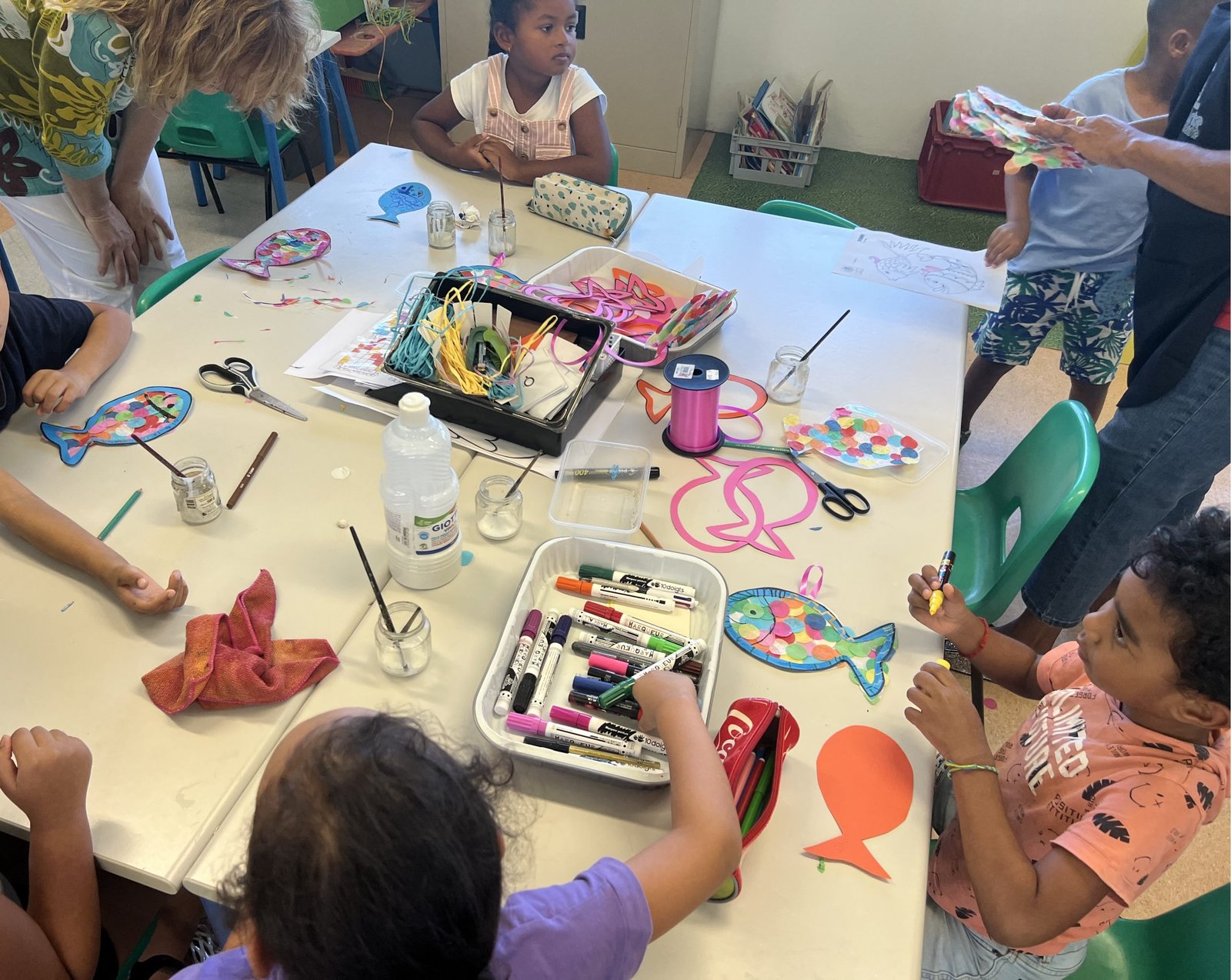
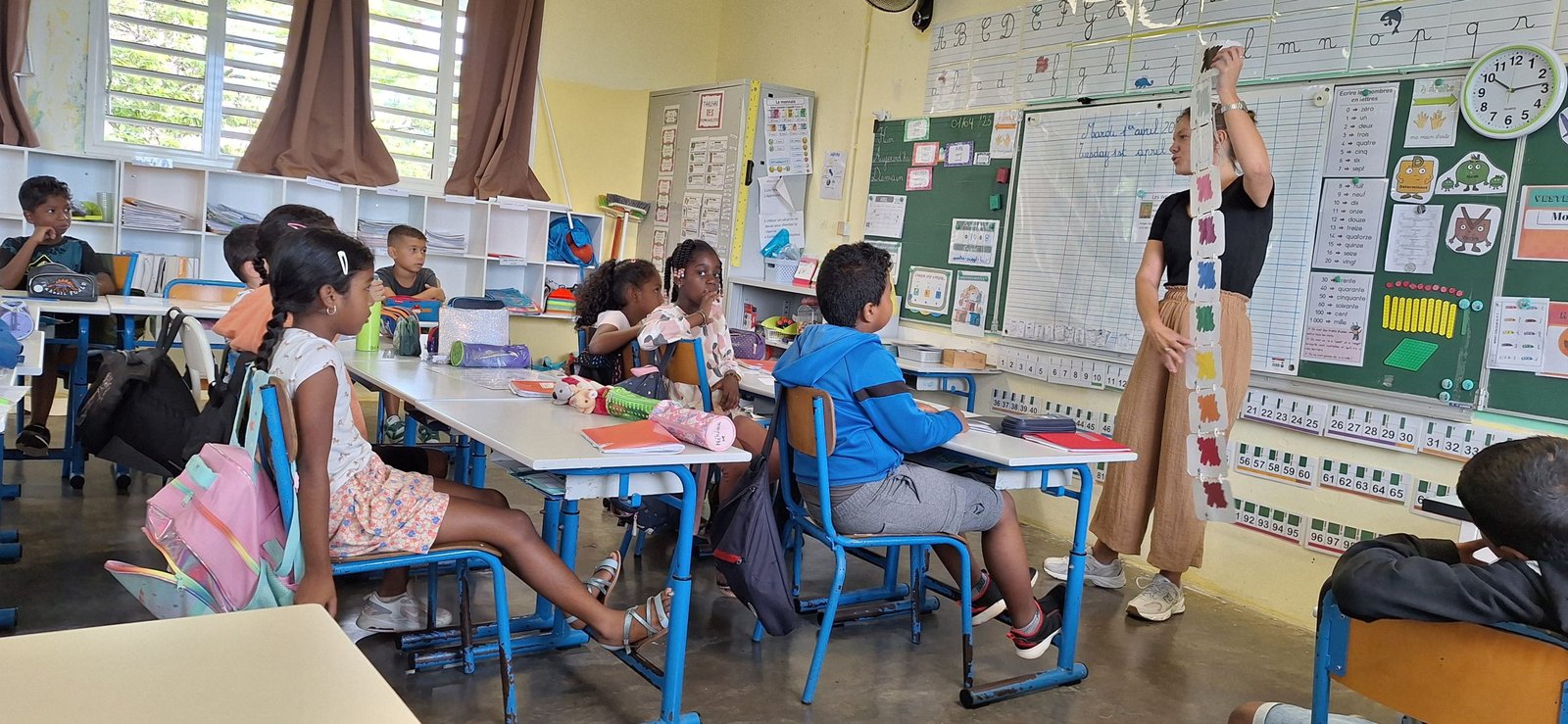
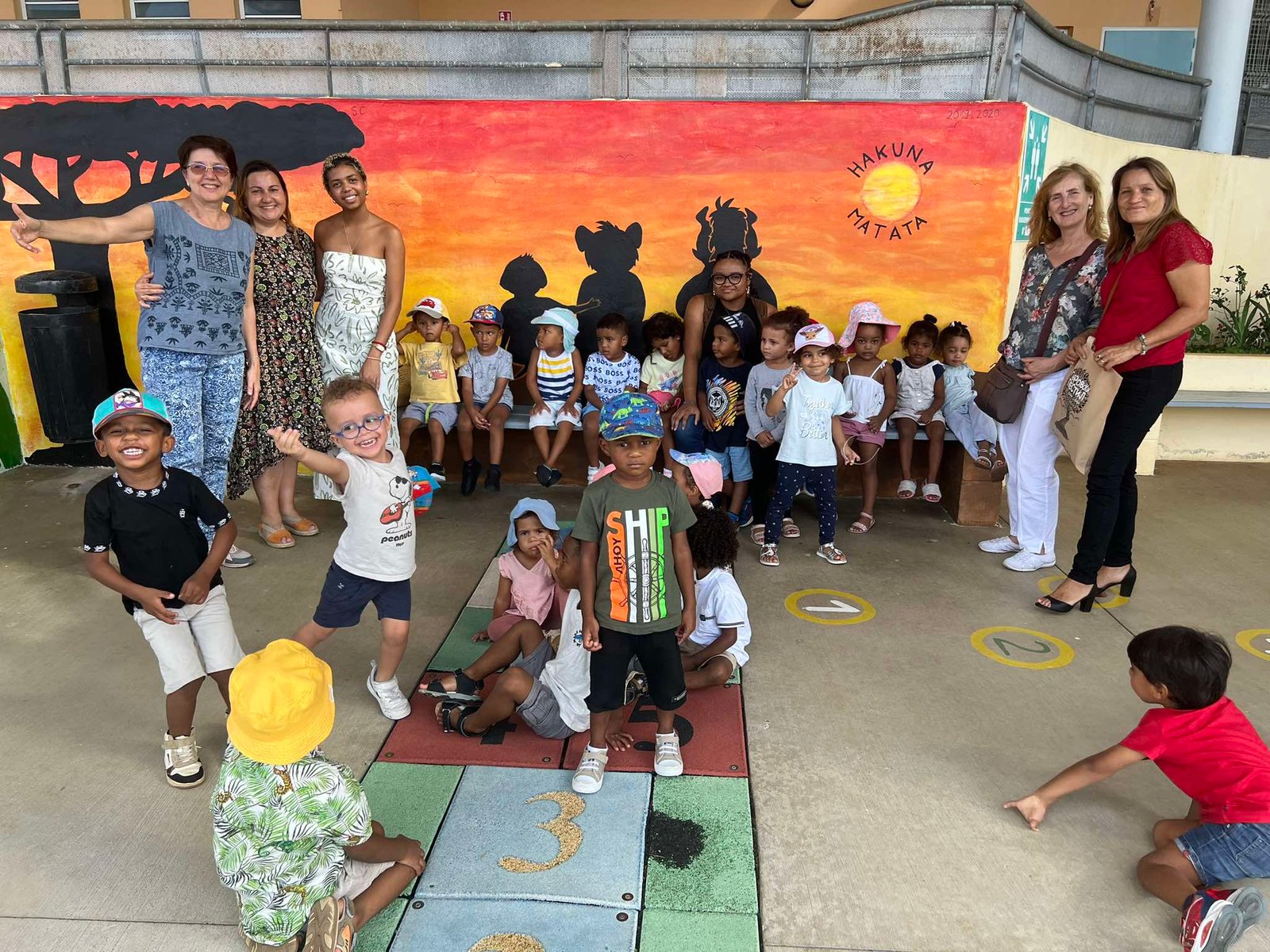
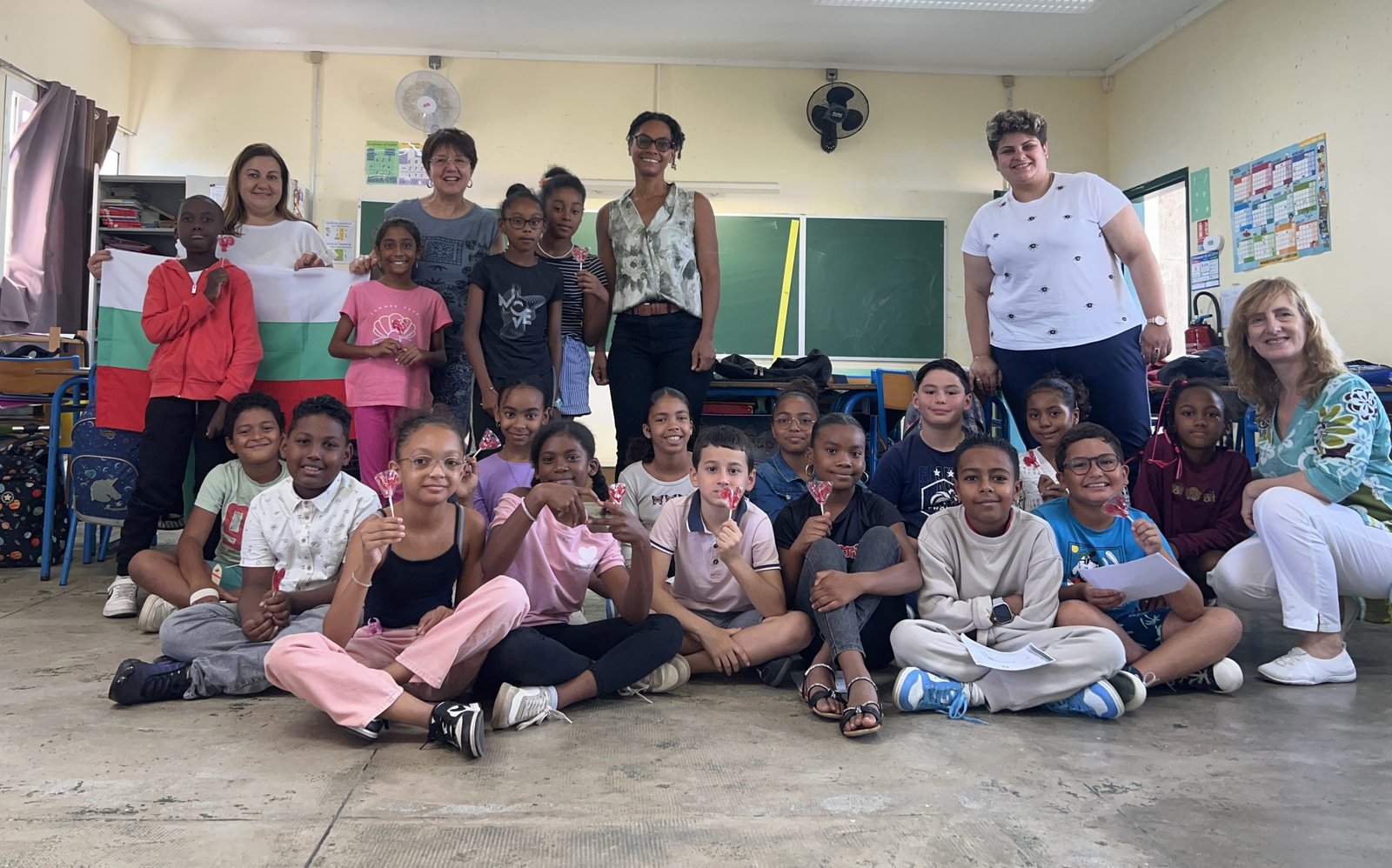
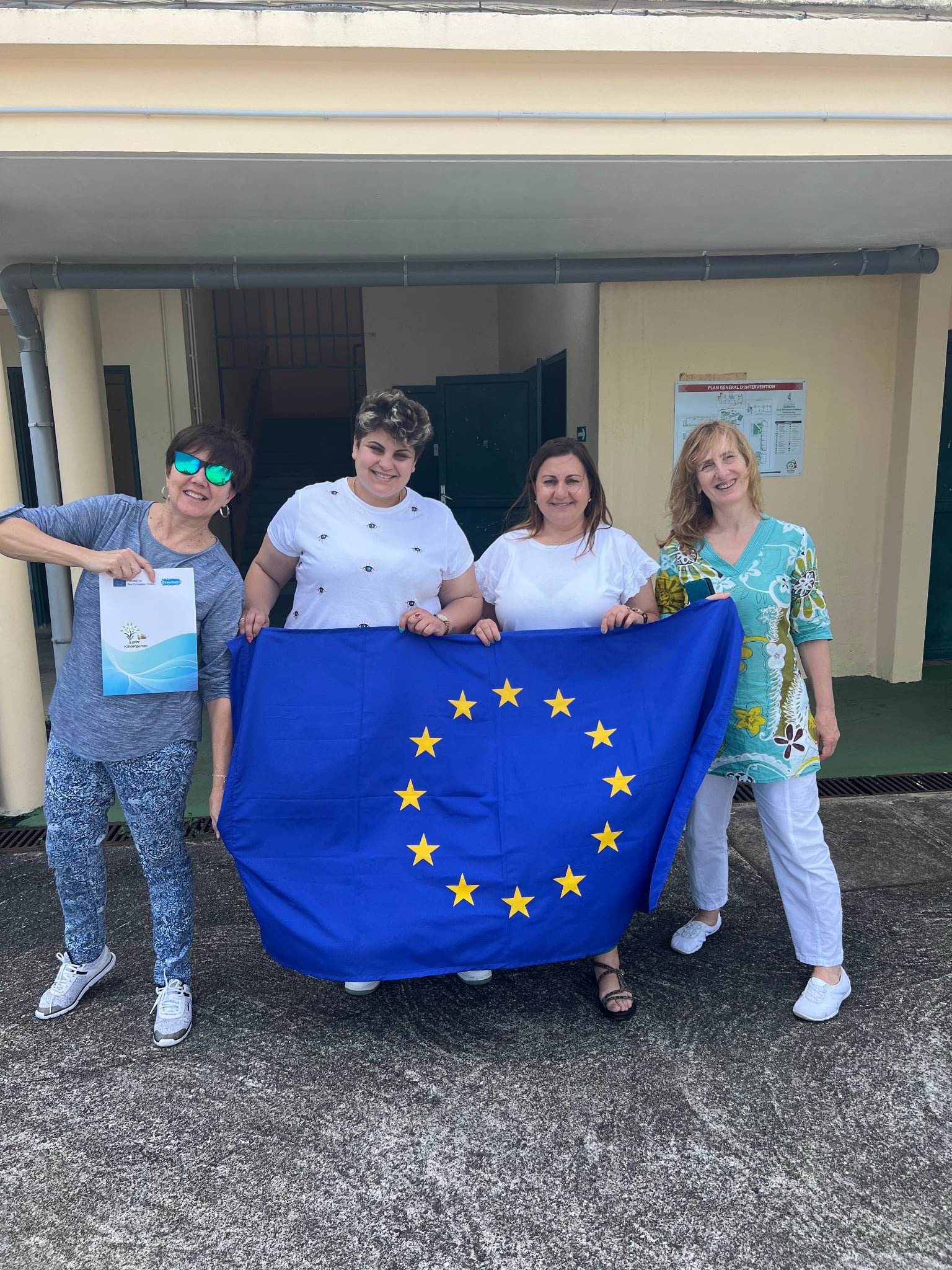
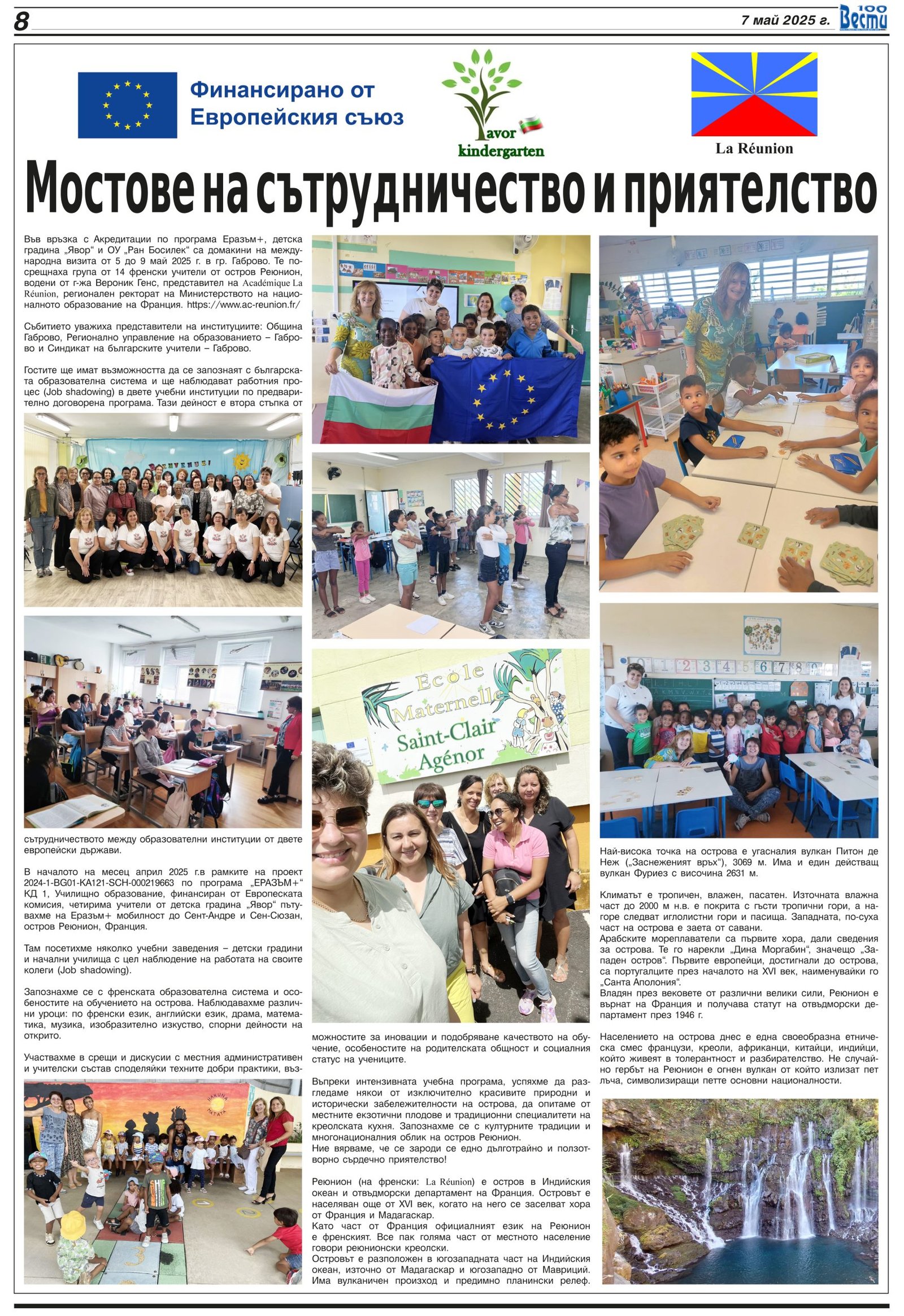
- At the beginning of April 2025, within the framework of the project, four teachers from Yavor kindergarten traveled on Erasmus+ mobility to Saint-André and Saint-Suzanne, Reunion Island, France. There, we visited several primary schools and the kindergarten attached to them in order to observe the work of our colleagues /Job shadowing/.
- We got acquainted with the French education system and the peculiarities of education on the island. We observed various lessons: in French, English, drama, mathematics, music, fine arts, outdoor activities. We participated in meetings and discussions with the local administrative and teaching staff, sharing their good practices, opportunities for innovation and improving the quality of education, the peculiarities of the parent community and the social status of students.
- Despite the intensive curriculum, we managed to see some of the extremely beautiful natural and historical landmarks of the island, to try local exotic fruits and traditional specialties of Creole cuisine. We got acquainted with the cultural traditions and multinational appearance of Reunion Island.
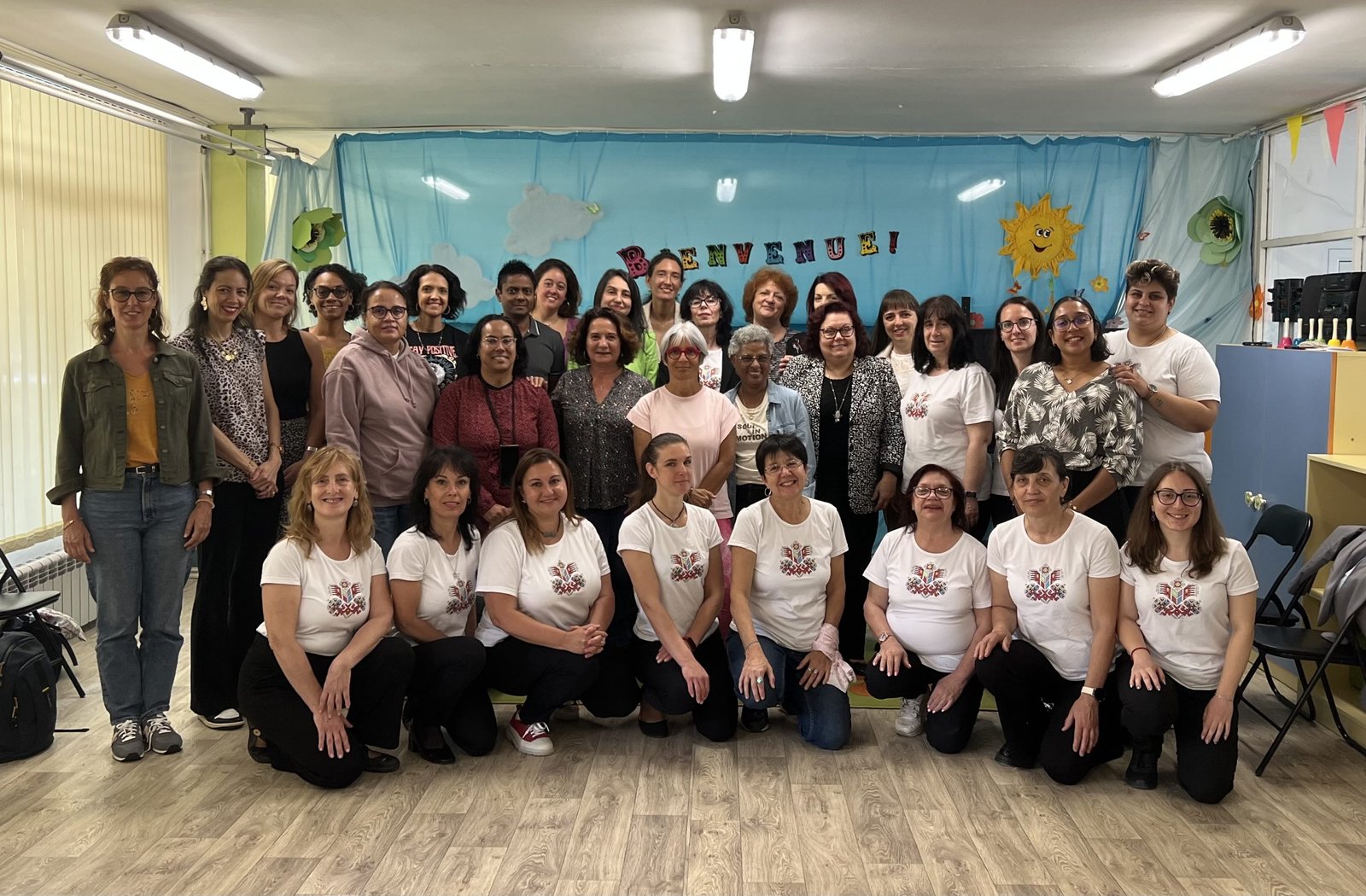
- A month later, we hosted an international visit from May 5 to 9, 2025 in the city of Gabrovo. We met a group of 14 French teachers from Reunion Island, led by Ms. Véronique Gens, representative of Académique La Réunion, a regional rectorate of the Ministry of National Education of France. The guests had the opportunity to get acquainted with the Bulgarian education system and will observe the work process /Job shadowing/ in the kindergarten according to a previously agreed program in various educational areas. This activity was the second step in the cooperation between educational institutions from the two European countries. We believe that a long-lasting and fruitful cordial friendship was born!
This project has been funded with the support of the European Commission. This publication reflects the views only of the author, and the Commission cannot be held responsible for any use which may be made of the information contained therein.
2024/2025
The Art of Rhythm™ is a unique and effective method that includes:
- musical;
- bodily-kinesthetic;
- visual-spatial;
- linguistic;
- logical-mathematical training;
Project objective:
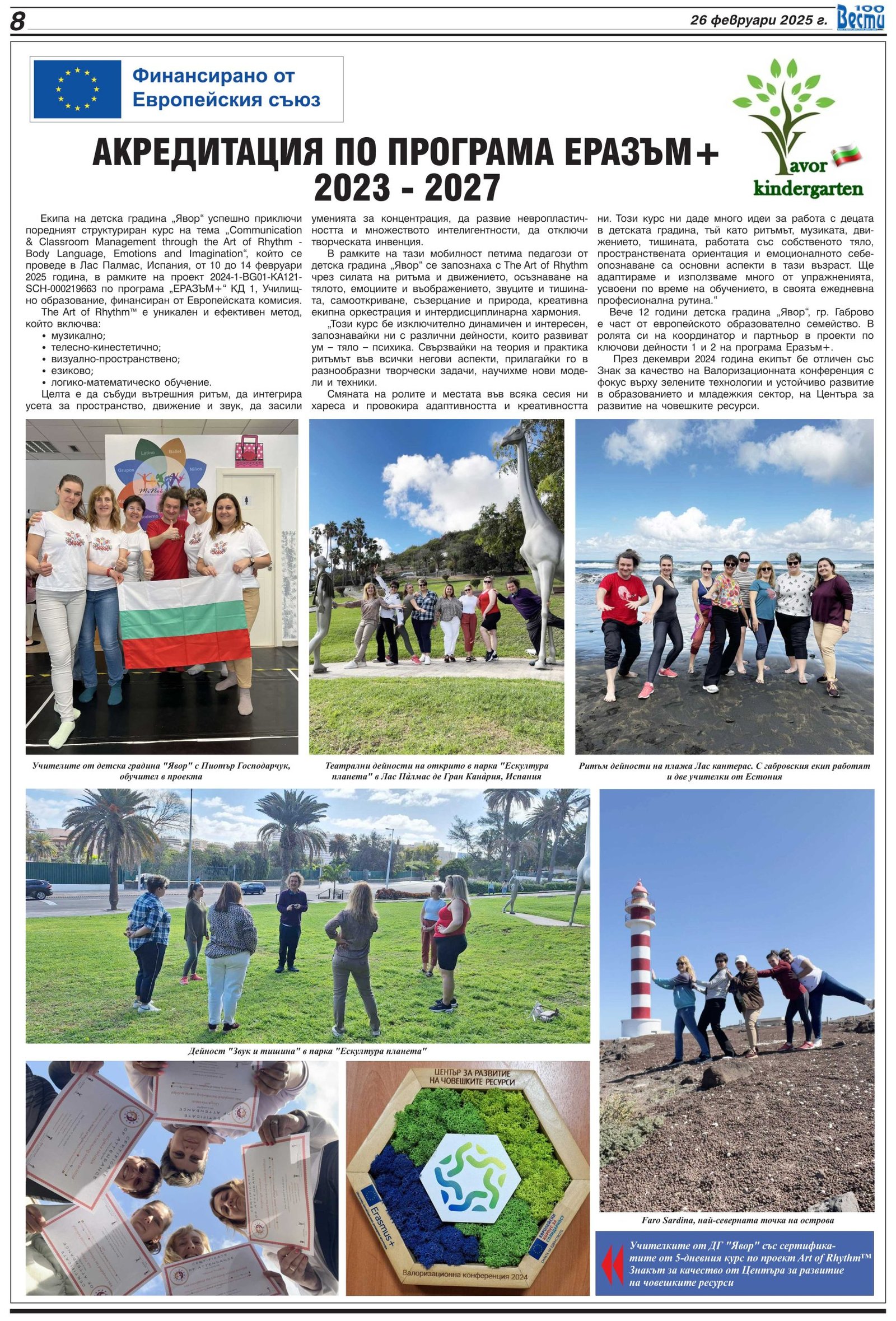
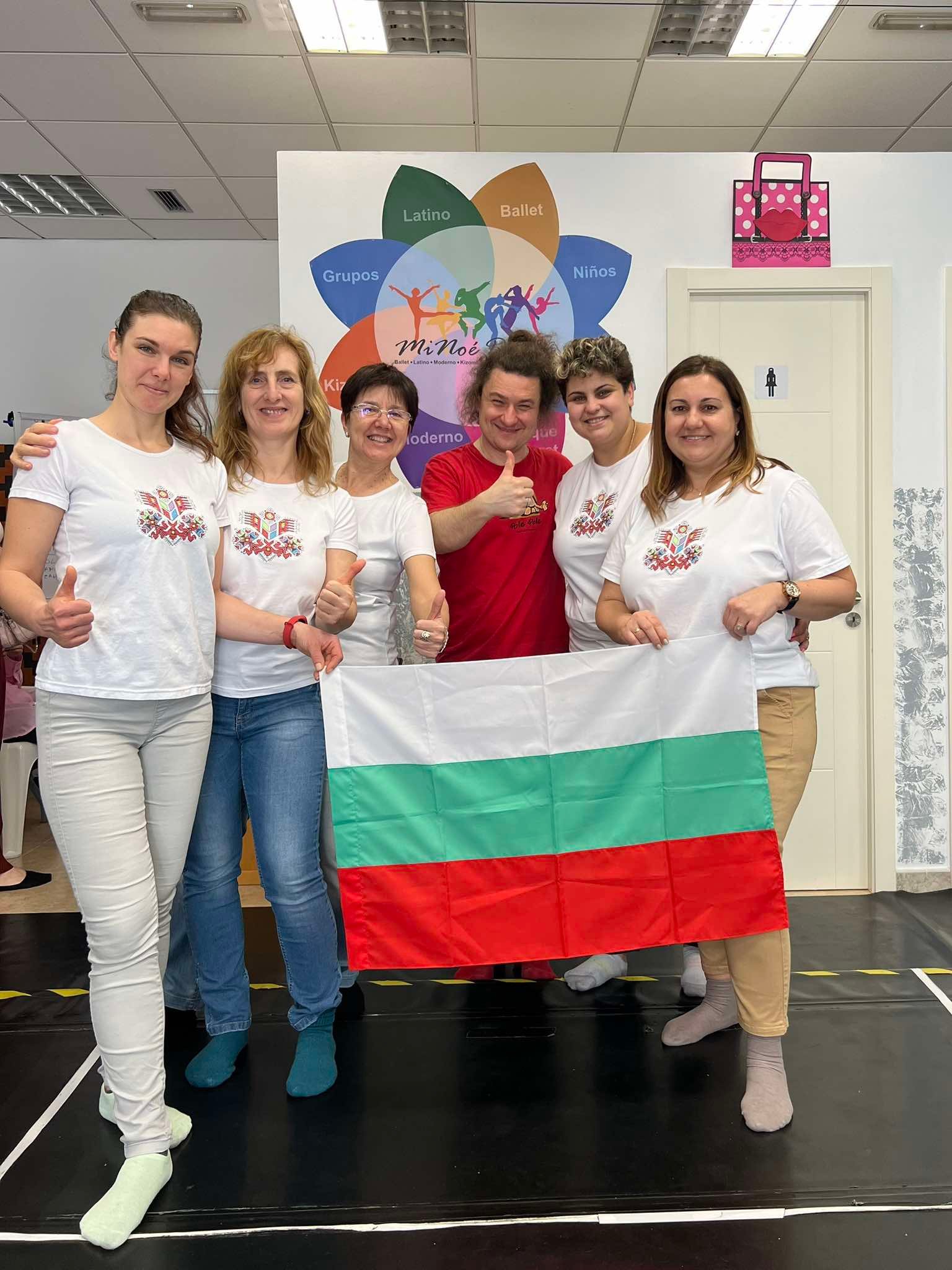
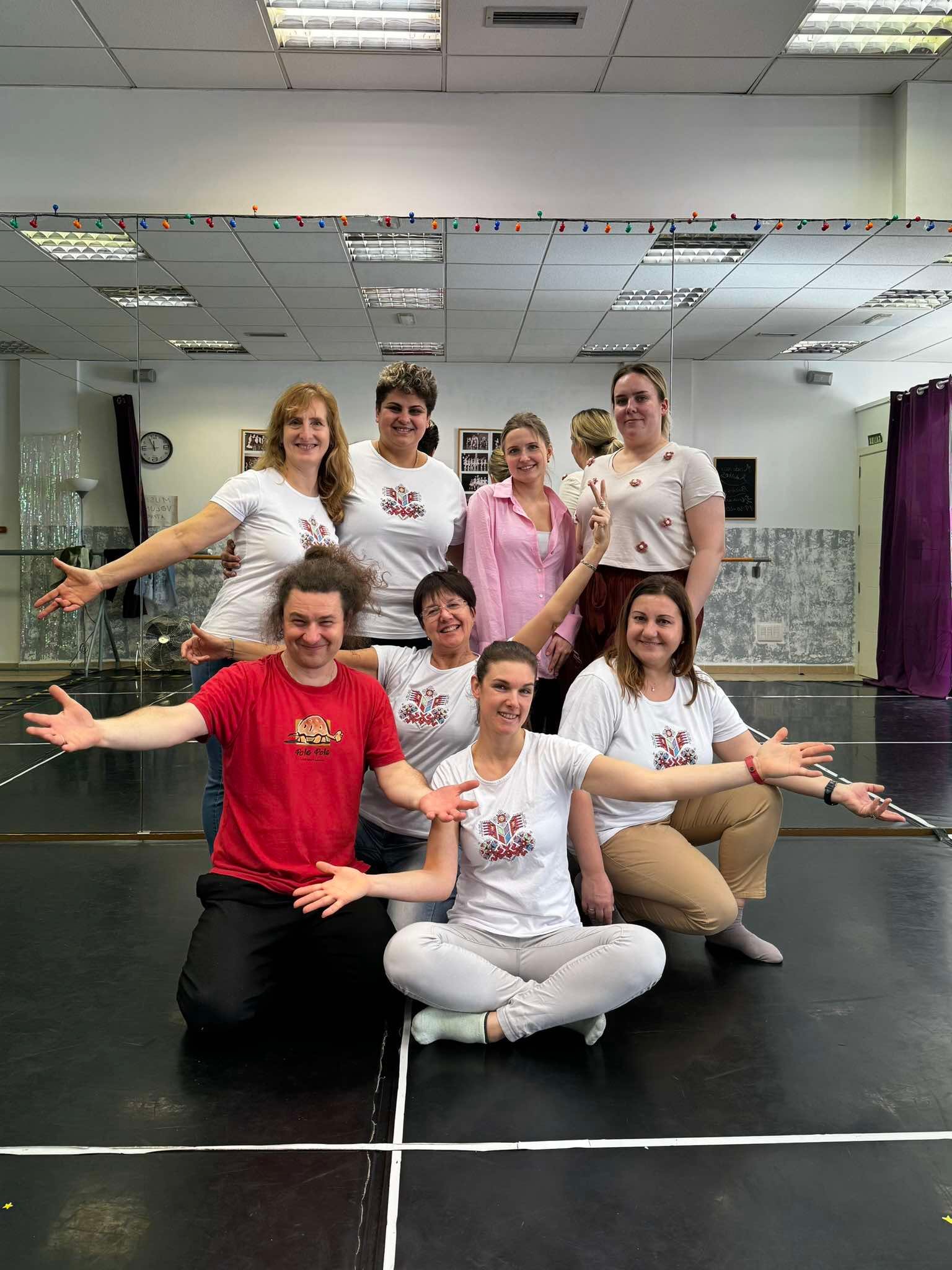
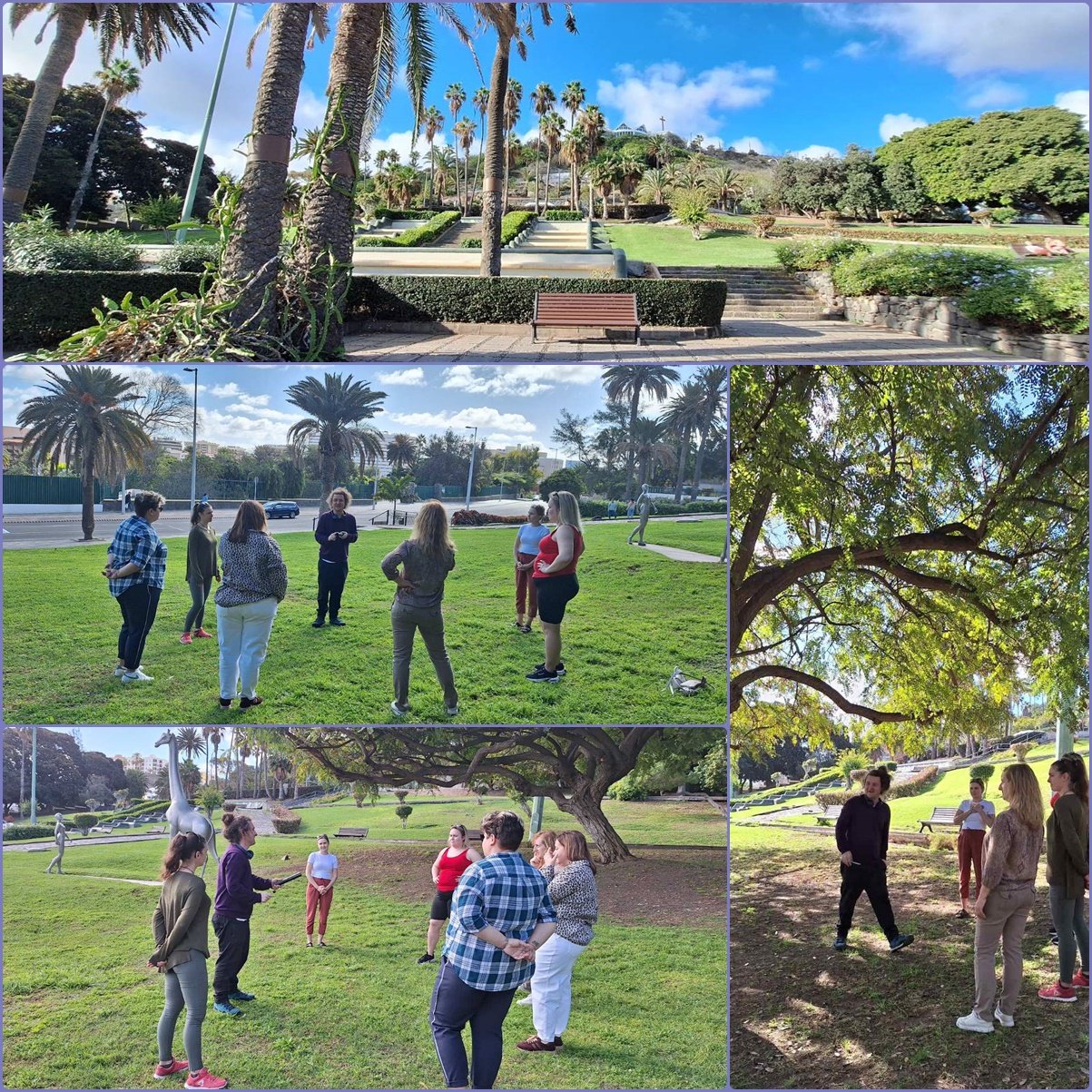
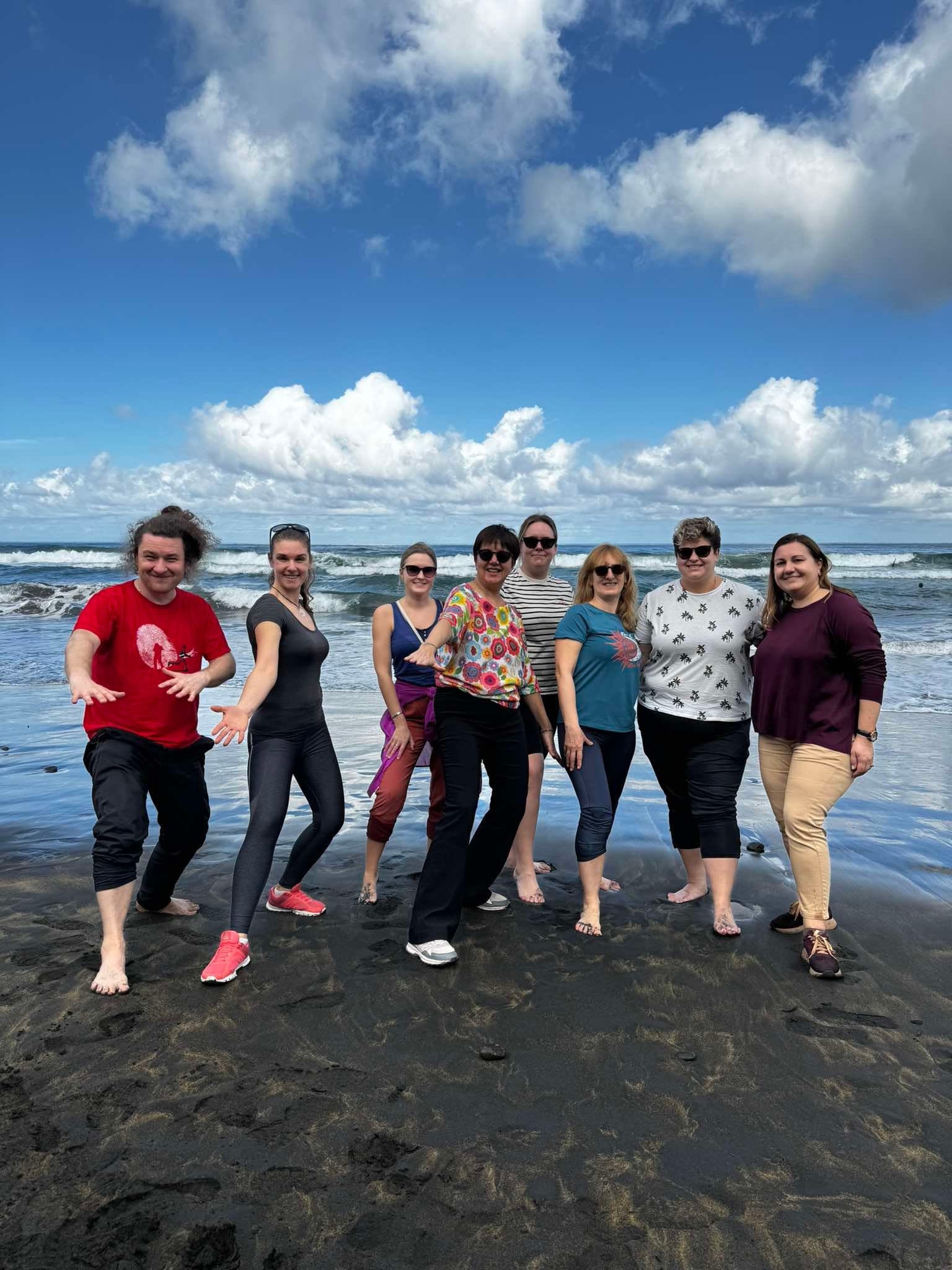
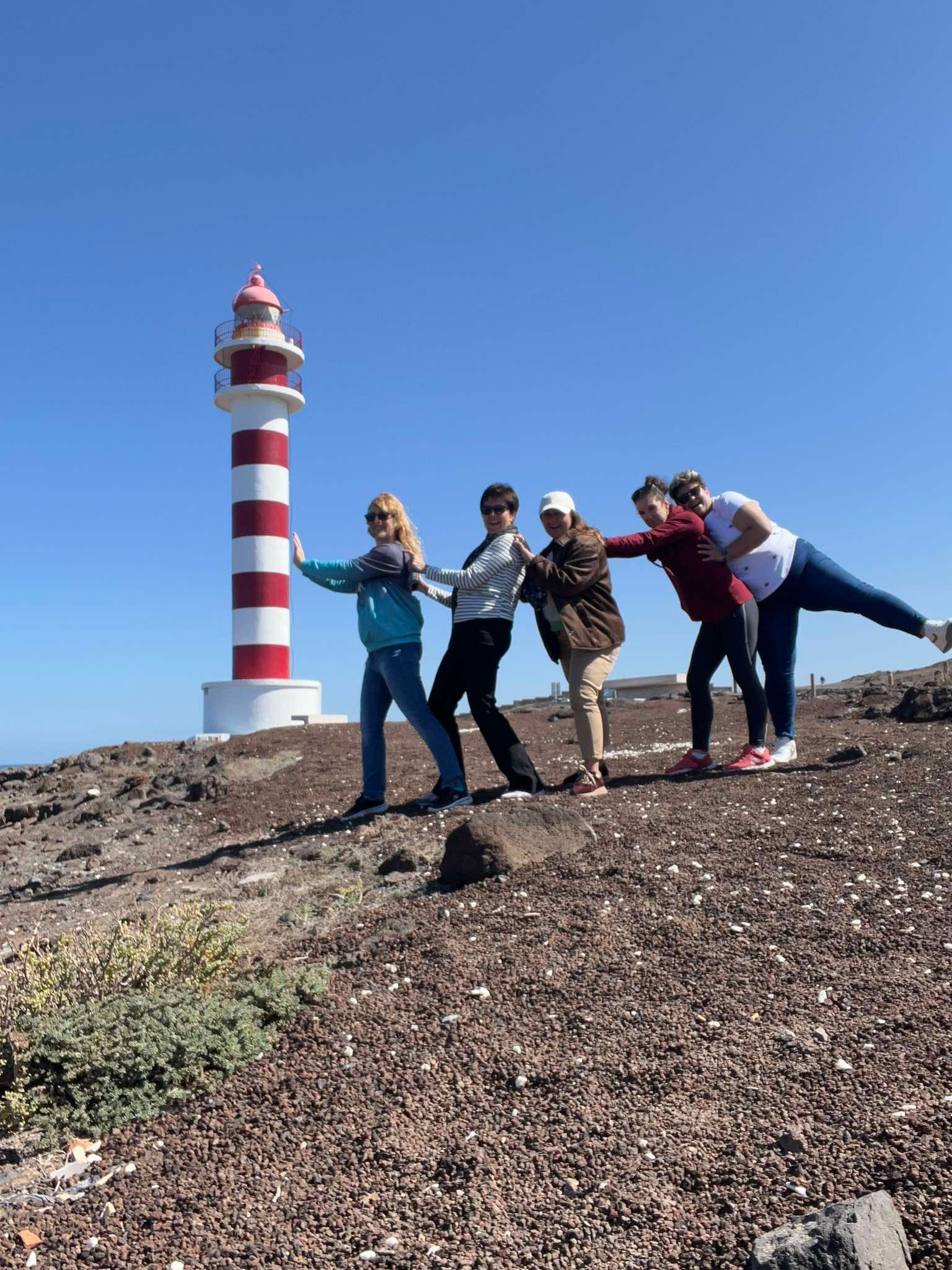
- . Participation of five kindergarten teachers in a structured training course on the topic "Communication & Classroom Management through the Art of Rhythm - Body Language, Emotions and Imagination", which was held in Las Palmas, Spain, from February 10 to 14, 2025.
- The goal is to awaken the inner rhythm, integrate the sense of space, movement and sound, strengthen concentration skills, develop neuroplasticity and multiple intelligences, and unlock creative invention.
- Within the framework of this mobility, five teachers from Yavor Kindergarten were introduced to The Art of Rhythm through the power of rhythm and movement, awareness of the body, emotions and imagination, sounds and silence, self-discovery, contemplation and nature, creative team orchestration and interdisciplinary harmony. "This course was extremely dynamic and interesting, introducing us to various activities that develop mind - body - psyche. Connecting rhythm in all its aspects in theory and practice, applying it in various creative tasks, we learned new models and techniques. We liked the change of roles and places in each session and provoked our adaptability and creativity. This course gave us many ideas for working with children in kindergarten, as rhythm, music, movement, silence, working with one's own body, spatial orientation and emotional self-knowledge are key aspects at this age. We adapted and use many of the exercises learned during the training in our daily professional routine. We also developed our language and intercultural, social, civic and organizational skills to a higher level.
This project has been funded with the support of the European Commission. This publication reflects the views only of the author, and the Commission cannot be held responsible for any use which may be made of the information contained therein.